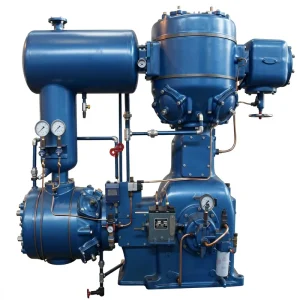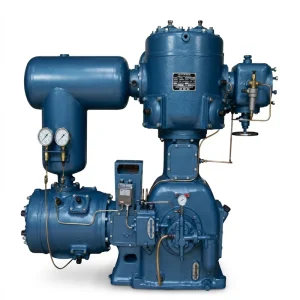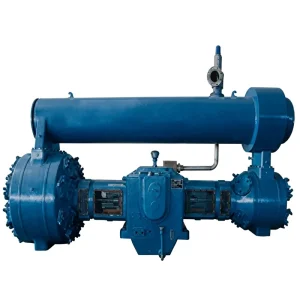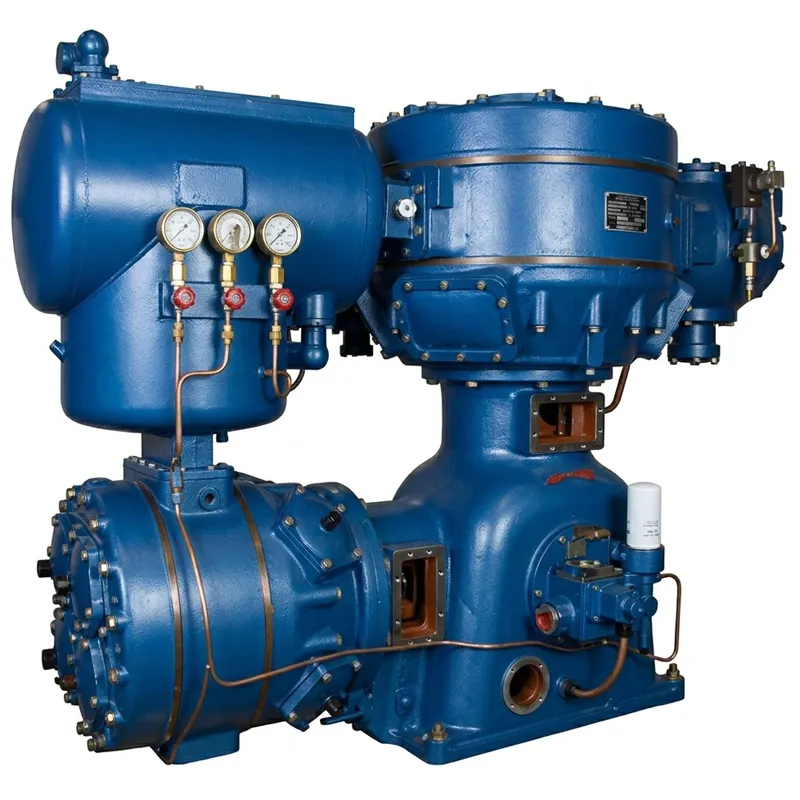
EP-L5.5-40/8 Reciprocating Air Compressor
The L5.5 designation identifies this machine within the L-series two-column layout family — a configuration that has been at the heart of large industrial compressed-air supply systems for generations. The “40/8” suffix describes the unit’s rated performance envelope: a free-air delivery of 40 m³/min against a maximum continuous discharge pressure of 0.8 MPa. At this output level, the EP-L5.5-40/8 sits firmly in the upper-medium capacity bracket of two-stage reciprocating compressors, making it the right specification for centralised compressed-air rings serving multiple production areas simultaneously. Unlike screw machines in this power class, the reciprocating piston air compressor design delivers a higher instantaneous pressure ratio per stage and tolerates wide ambient temperature variation without performance degradation — an important characteristic for outdoor or semi-outdoor plant installations in regions such as southern France, the Middle East, or tropical Southeast Asia.
The design of reciprocating air compressor equipment at this scale centres on robust crankcase rigidity, precise cylinder-bore alignment, and intercooling efficiency. On the EP-L5.5-40/8, the L-type frame positions cylinder banks at 90 degrees to one another, which distributes inertia forces symmetrically and dramatically reduces vibration transmission to the foundation.
High-Capacity Reciprocating Compressor Series
EP-L5.5-40/8 Reciprocating Air Compressor
The EP-L5.5-40/8 is a heavy-duty, two-column two-stage reciprocating air compressor designed for high-volume industrial compressed-air applications where 40 m³/min of sustained free-air delivery is required at a working pressure of 0.8 MPa. Powered by a 240 kW (250 kW peak) drive motor, this industrial reciprocating compressor meets the demands of large-scale manufacturing, energy, and processing plants across France, Europe, and global export markets. With over seven decades of engineering heritage behind its design, this reciprocating air compressor represents a proven and bankable choice for facilities that cannot afford unplanned downtime.
1. Technical Specifications
The performance data below is drawn from the manufacturer's factory-acceptance test documentation and engineering datasheet for the EP-L5.5-40/8 series. All parameters reflect operation at rated conditions with a properly maintained lubrication system and clean inlet air supply.
| Parameter | Value | Notes |
|---|---|---|
| Model Designation | EP-L5.5-40/8 | L-series, 5.5 sub-family |
| Compressor Type | Two-column, Two-stage Reciprocating Piston | L-type frame, 90° cylinder arrangement |
| Free-Air Delivery (FAD) | 40 m³/min | Measured per ISO 1217, inlet conditions |
| Rated Discharge Pressure | 0.8 MPa (8 bar) | Maximum continuous working pressure |
| Drive Motor Power | 240 kW (peak 250 kW) | Three-phase asynchronous motor, IE3 class |
| Supply Voltage Options | 380 V / 6 kV / 10 kV, 50 Hz | High-voltage options suit large plant MV distribution |
| Overall Dimensions (L×W×H) | 2890 mm × 1600 mm × 1880 mm | Main unit, excludes ancillary piping runs |
| Unit Weight (Dry) | 3.70 t | Operating weight without coolant charge |
| Cooling Method | Water-cooled (air-cooled option available) | Intercooler + aftercooler, shell-and-tube standard |
| Lubrication System | Forced pressure-feed + splash | Gear-type oil pump; full-flow filter standard |
| Noise Level (at 1 m) | ≤ 84 dB(A) | Per EN ISO 2151; acoustic enclosure optional |
| Ambient Temperature Range | 5 °C – 40 °C | Extended high-temp spec available on request |
| Quality Standard | ISO 9001 (certified since 2001) | Factory acceptance test mandatory before shipping |
| Inter-stage Pressure (approx.) | ~0.27 MPa | First-stage outlet / intercooler inlet |
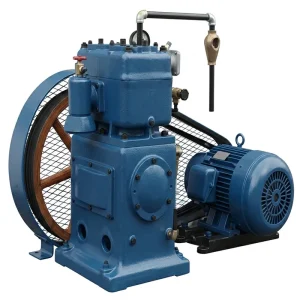
Single Stage Reciprocating Air Compressor
2. Reciprocating Air Compressor Working Principle
The reciprocating air compressor working principle is fundamentally straightforward, which is a large part of why piston machines have remained the dominant technology in high-pressure, medium-to-large capacity compressed-air applications for well over a century. A rotating crankshaft — driven directly or via belt coupling by the electric motor — imparts an oscillating linear motion to one or more pistons through connecting rods. Each piston sweeps through a cylinder bore in two directions: the suction stroke and the compression stroke. During suction, the piston retreats from top dead centre, expanding the cylinder volume, dropping the internal pressure below atmospheric, and drawing fresh air through the automatically opening suction valve. As the piston advances on the compression stroke, the trapped gas is reduced in volume and its pressure rises progressively. Once the pressure exceeds the spring-force pre-load of the discharge valve, the valve opens and the compressed gas exits into the downstream circuit.
On the EP-L5.5-40/8, this sequence occurs across two successive stages, separated by an intercooler. First-stage cylinders accept atmospheric air and compress it to an intermediate pressure of approximately 0.27 MPa. The warm gas is then routed through the shell-and-tube intercooler, where cooling water (or ambient air in the air-cooled variant) extracts a substantial portion of the heat of compression. Cooling the gas before it enters the second stage reduces its specific volume, meaning the second-stage cylinders handle a denser charge, achieving the same final pressure with less piston force and lower power input than a single-stage machine of equivalent output. This thermodynamic advantage is why the two-stage intercooled reciprocating piston air compressor consistently outperforms direct single-stage compression on energy efficiency metrics across the 40 m³/min output range. The complete reciprocating air compressor diagram for this model includes two low-pressure cylinders, two high-pressure cylinders, an intercooler, an aftercooler, a moisture separator, safety relief valves, and a lubrication circuit supplying all bearing and cylinder wall contact surfaces throughout the operating cycle.
3. Five Core Performance Advantages
40 m³/min Sustained Capacity
Few air compressor machines in the piston category match the EP-L5.5-40/8's ability to maintain full 40 m³/min output continuously without throttling or cycling. This makes it the right specification for large production halls, centralised compressed-air rings serving eight or more machine tools simultaneously, or high-throughput packaging and bottling lines where air demand is constant across multiple shifts.
Dual Voltage Flexibility (380 V / 6 kV / 10 kV)
Many large industrial plants distribute power at medium-voltage levels (6 kV or 10 kV) to reduce distribution copper costs and transformer losses. The EP-L5.5-40/8 is available with motor configurations compatible with all three voltage options, allowing direct integration into both low-voltage and medium-voltage switchgear without additional step-down transformers — a practical advantage for greenfield projects in France, Germany, or across the Middle East where MV distribution is standard.
Two-Stage Intercooled Efficiency
By splitting compression across two stages with a heat exchanger in between, this reciprocating air compressor achieves a specific power consumption that is measurably lower than single-stage machines delivering the same output pressure. Lower discharge temperatures also mean less moisture carryover into downstream pipework, reducing corrosion risk and extending the service life of air-operated equipment connected to the compressed-air ring.
L-Frame Vibration Balance
The 90-degree cylinder arrangement of the L5.5 frame achieves near-complete first-order inertia balance without requiring external counterweights. This design of reciprocating air compressor keeps foundation dynamic loads low, enabling lighter-weight concrete plinths compared to in-line or V-configuration compressors of the same capacity — a meaningful civil cost saving for new installations across any market.
Extensive Parts Availability & Long-Term Supportability
All reciprocating air compressor parts for the L5.5 series are stocked in the manufacturer's dedicated spare-parts warehouse and can be shipped internationally within 48 hours for stocked items. Standardised valve assemblies, piston rings, gasket sets, and bearing shells mean maintenance teams — experienced with this type of reciprocating air compressor — across Europe and worldwide can source spares quickly and cost-effectively, without reliance on a single regional distributor network.
4. Materials & Build Construction
The engineering pedigree behind the EP-L5.5-40/8 is reflected in the material selection for every load-bearing and wear-sensitive component. Each element is chosen to maximise service life under the continuous-duty operating conditions typical of a 40 m³/min compressed-air station running two or three shifts per day.
| Component | Material Specification | Engineering Rationale |
|---|---|---|
| Main Frame / Crankcase | High-tensile grey cast iron HT250, stress-relieved | Exceptional vibration damping; holds alignment over decades of service |
| Cylinder Liners | Centrifugally cast alloy iron, honed to H7 tolerance | Superior wear resistance; liner replacement rather than full cylinder renewal |
| Crankshaft | Forged alloy steel 42CrMo4, ground and nitrided journals | Excellent fatigue resistance; 60+ HRC surface hardness minimises journal wear |
| Connecting Rods | Drop-forged carbon steel, shot-peened for fatigue improvement | High tensile-to-weight ratio; H7-bored big-end for precision bearing fit |
| LP Stage Pistons | Aluminium alloy, anodised crown | Low reciprocating mass improves balance; good thermal conductivity |
| HP Stage Pistons | Nodular cast iron, machined all faces | Handles higher gas-load forces; compatible with elevated discharge temperatures |
| Piston Rings | Chrome-plated cast iron (standard); PTFE-composite (optional oil-reduced) | Long ring life; reduced friction and cylinder-wall wear rate |
| Valve Plates & Seats | High-alloy spring steel, precision-ground | Self-acting design; fatigue-rated for >10⁸ operating cycles |
| Intercooler & Aftercooler | Carbon steel shell, copper-finned tubes or bare steel tubes | Pressure-vessel certified; high thermal efficiency reduces stage outlet temp |
| Main Bearings | Babbitt-lined split shell (main + big-end); rolling-element small-end | Embeddable; absorbs misalignment; field-renewable without line boring |
Reciprocating air compressor oil for the EP-L5.5-40/8 should meet ISO VG 100 or ISO VG 150 classification per DIN 51506 group VBL. At 240 kW continuous load, oil temperatures in the crankcase can reach 60–70 °C; using the correct viscosity grade prevents film thinning on crankpin journals during hot restarts. Initial oil-and-filter change after 200 operating hours removes running-in particles; thereafter, a 2,000-hour or 12-month interval applies under normal service conditions. Buyers operating in high-humidity coastal environments — common in French Atlantic ports or tropical export markets — should shorten drain intervals and test oil samples quarterly for water content to protect bearing surfaces from emulsification damage.
5. Application Scenarios
With a free-air delivery of 40 m³/min and a 240 kW drive, the EP-L5.5-40/8 reciprocating air compressor fills the compressed-air supply role in applications where smaller machines fall short of demand and where the installation permanence justifies a heavy-duty piston machine over a packaged screw solution. The following sectors represent its most frequent deployment environments globally.
◆ Large-Scale PET Packaging & Blow Moulding
High-speed PET stretch-blow moulding lines with 6 or more cavities running at 1,500+ bottles per hour require a pre-blow air supply in the 0.7–1.0 MPa range with sufficient volume to prevent cavity under-fill. The EP-L5.5-40/8 satisfies this demand for multi-line packaging facilities, particularly when paired with an ISBM machine for fully integrated one-step production. Its stable pressure output eliminates bottle-wall variability caused by header pressure fluctuations during peak demand spikes.
◆ Steel & Metal Processing Plants
Steelworks, rolling mills, and metal fabrication facilities consume compressed air for pneumatic scarfing, scale blowing, cooling-water control valves, and automated material-handling systems. At 40 m³/min, the EP-L5.5-40/8 supports a medium-size steelwork's instrument and utility air needs from a single machine, reducing capital equipment count. The industrial reciprocating compressor's tolerance for dusty, hot environments — provided inlet filtration is maintained — makes it well-suited to this sector.
◆ Chemical & Gas Processing
Process engineers in chemical plants, fertiliser producers, and gas-handling facilities frequently specify reciprocating compressors where precise pressure ratio, low leakage past piston rings, and the ability to handle mildly contaminated or damp process streams are required. While the EP-L5.5-40/8 is rated for ambient air, its sister models in the same L-series cover gas applications including nitrogen, CO₂, and mixed gases for export buyers in the energy and industrial-gas sectors.
◆ Municipal & Infrastructure Projects
Wastewater treatment plants in France and globally use compressed air for aerating bioreactors and operating pneumatic sluice gates. Railway and metro systems use centralised compressed-air stations to supply brake and door actuator circuits for multiple trainsets. The EP-L5.5-40/8 delivers the volume and reliability these critical-infrastructure applications demand, with a mean-time-between-overhaul figure that suits low-staffing utility environments.
◆ Textile & Fibre Manufacturing
Modern air-jet looms and texturing machines in the textile industry consume substantial quantities of clean, dry compressed air — often in the 0.5–0.8 MPa range — to insert weft yarn at speed. A single EP-L5.5-40/8 can supply 20–30 high-speed air-jet looms simultaneously when properly filtered and dried. This makes the machine a practical choice for large weaving mills in France, Italy, and across Asia, where compressed-air availability directly limits production throughput.
◆ Shipbuilding & Heavy Engineering
Dry docks and heavy engineering fabrication yards need continuous pneumatic power for needle-gun scaling, sandblasting preparation, torque tools, and pneumatic rivet setting. The 3.70-tonne mass of the EP-L5.5-40/8 means it is typically installed as a permanent station unit rather than a portable plant, serving as the foundation of a yard's compressed-air infrastructure. Its long service life and straightforward piston ring replacement cycle fit well with the maintenance philosophies common in European and Asian shipyards.
6. Regulatory Compliance & Global Standards
Compressed-air equipment at the 240 kW power class is subject to multiple layers of safety and environmental regulation. The following table summarises the key frameworks applicable to buyers in major markets. Compliance documentation can be prepared for any destination on request.
| Jurisdiction | Applicable Regulation / Standard | Relevance to Compressor Installation |
|---|---|---|
| EU / France | Machinery Directive 2006/42/EC; PED 2014/68/EU; Ecodesign Reg. 2019/1781 (IE3 motors) | CE marking; pressure-vessel conformity; minimum motor efficiency class |
| France (national) | Code du travail Art. R4543-1–R4543-21; Arrêté du 15 mars 2000 (pressure equipment inspection) | Statutory periodic inspection by accredited body; noise-at-work assessment required |
| United Kingdom | PSSR 2000; PUWER 1998; UKCA marking (post-Brexit) | Written scheme of examination; competent person inspection |
| Germany | BetrSichV (Betriebssicherheitsverordnung); DGUV Regel 100-500 | Operational safety; regular TÜV or DGUV inspection of pressure components |
| USA | ASME Section VIII Div.1 (receivers); OSHA 1910.169; CAGI performance standards | ASME-stamped receiver tanks; OSHA compressor room guarding; CAGI data sheet |
| Australia / NZ | AS/NZS 2971; WHS Regulations 2011; ABCB pressure equipment accreditation | Design registration; inspection at defined intervals; safety management plan |
| ISO (Global) | ISO 1217 (FAD acceptance test); ISO 2151 (noise); ISO 9001 (quality management) | Independent performance verification; noise limit compliance; QMS audit |
| Middle East / GCC | SASO (Saudi Arabia); ESMA (UAE); SHERQ management systems (oil & gas) | Type approval; energy efficiency audit; third-party inspection for major plant |
For French installations, the Pressure Equipment Directive (PED 2014/68/EU) requires the associated air receiver to carry a CE mark and a Declaration of Conformity classified to the appropriate fluid category. As the EP-L5.5-40/8 exceeds 200 kW motor power, energy audit requirements under French Decree 2013-1121 and the EU Energy Efficiency Directive 2012/27/EU may apply when the machine forms part of a wider industrial installation above the threshold for mandatory energy management system reporting. Additionally, under French Code du travail noise provisions, any compressor installation where operator exposure at 1 metre exceeds 80 dB(A) requires a documented noise-risk assessment and, where the 85 dB(A) upper action value is reached, mandatory hearing protection for all personnel in the compressor room.
7. About Us - Reciprocating Compressor Manufacturer
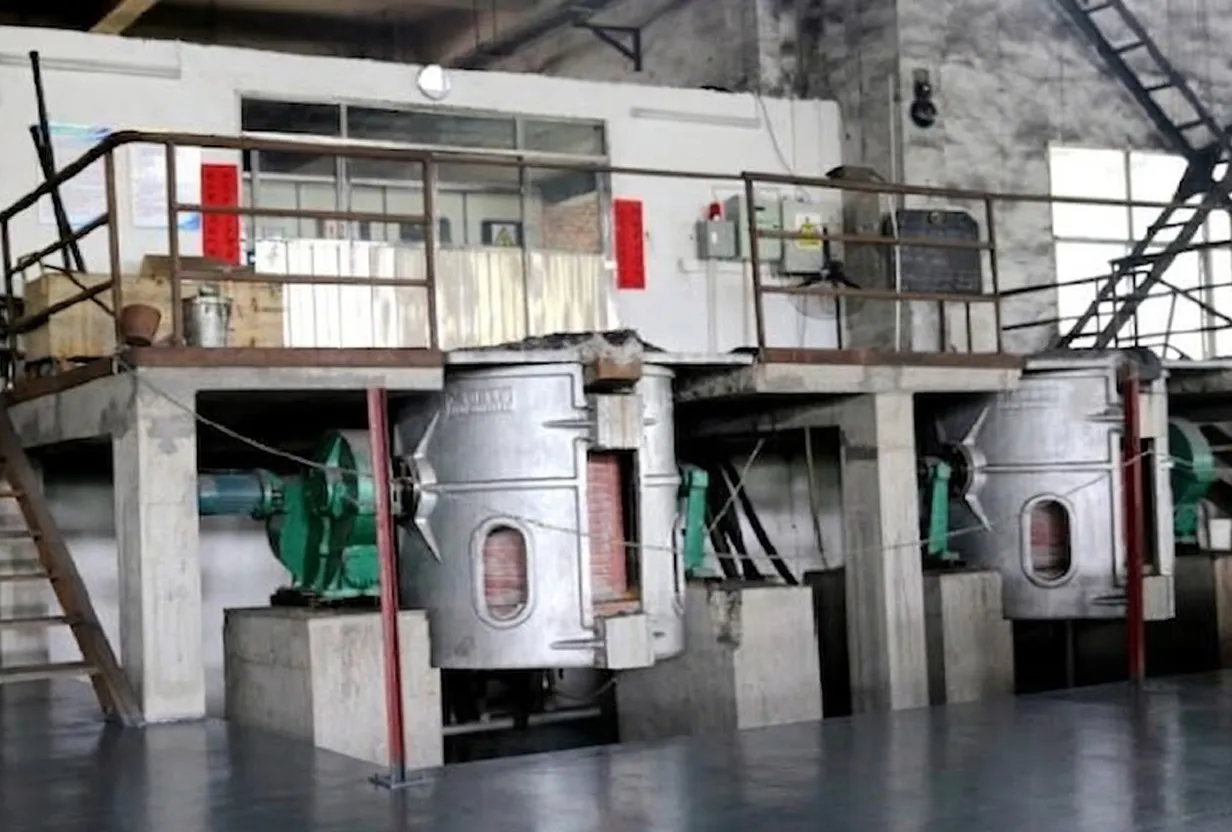
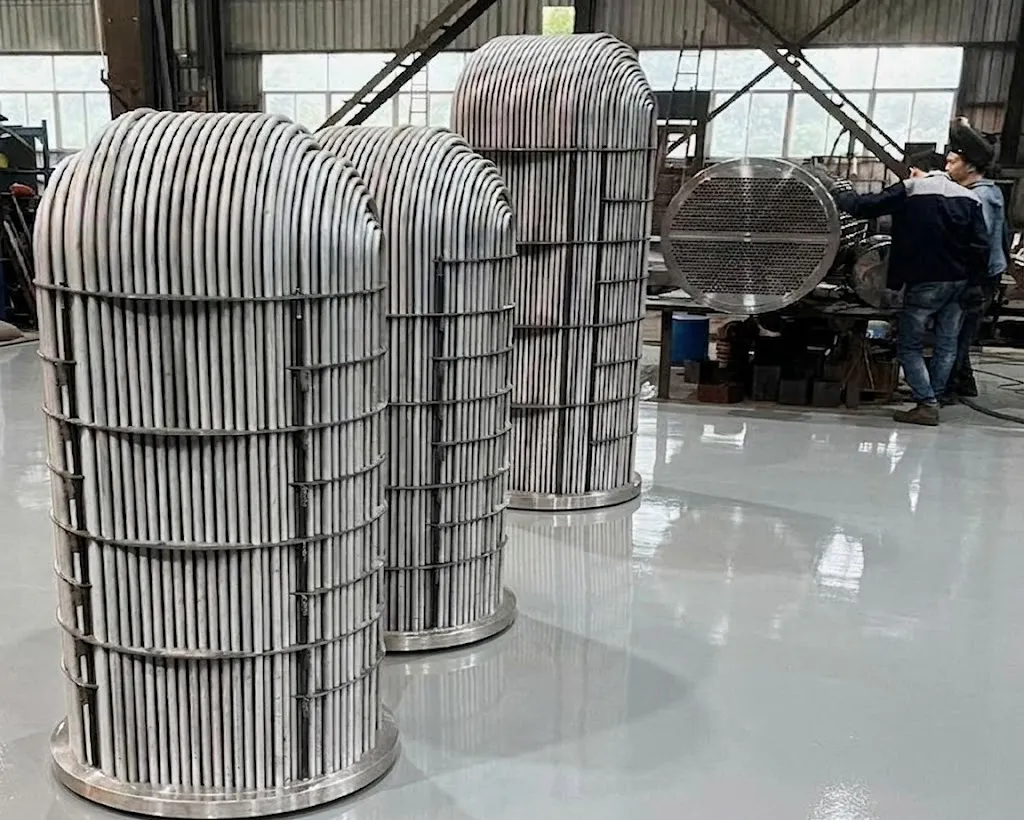
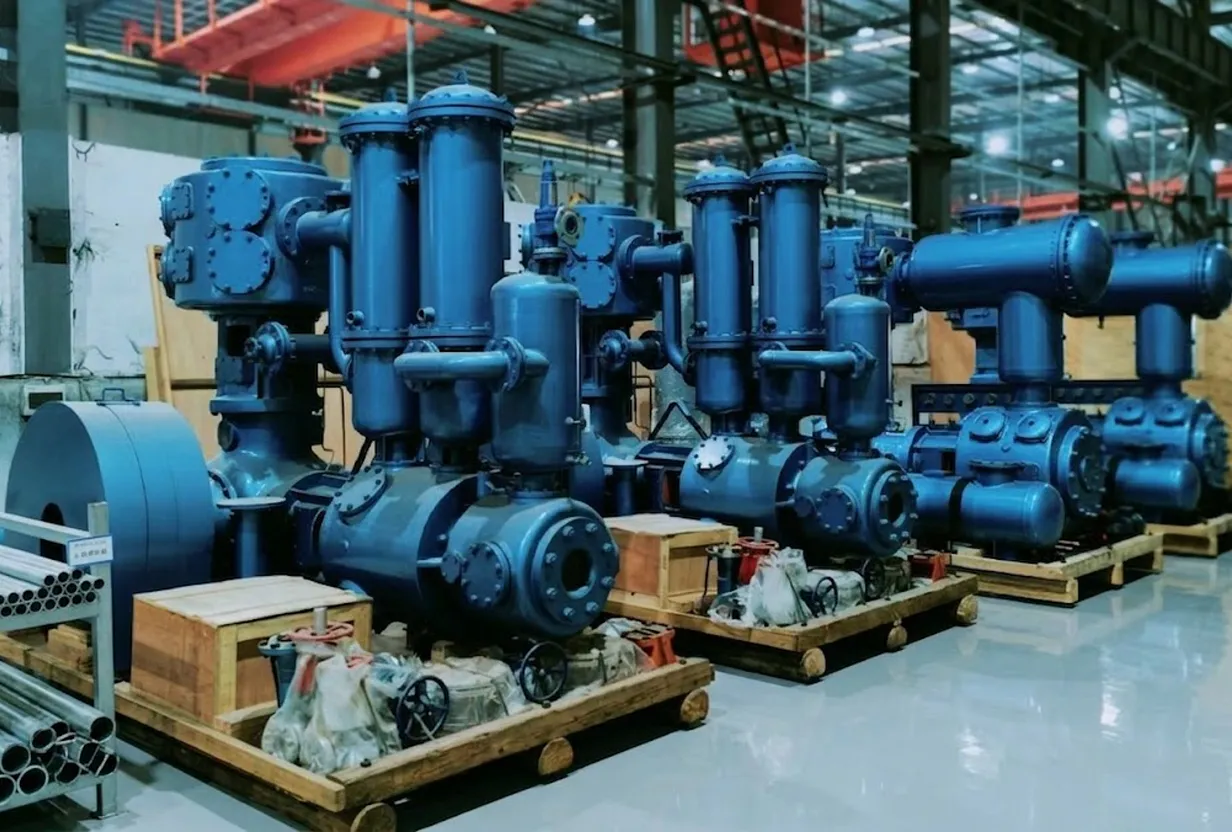
Our roots in reciprocating air compressor manufacture extend back to 1951, giving this organisation over 70 years of continuous engineering experience in the design, production, testing, and global supply of reciprocating and other compressor types. Our 320-strong workforce operates more than 600 sets of production equipment across dedicated shops for casting, machining, heat treatment, pressure-vessel fabrication, final assembly, and comprehensive acceptance testing.
We hold a compressor manufacturing licence and Class I and Class II (partial Class III) pressure-vessel design and fabrication permits.
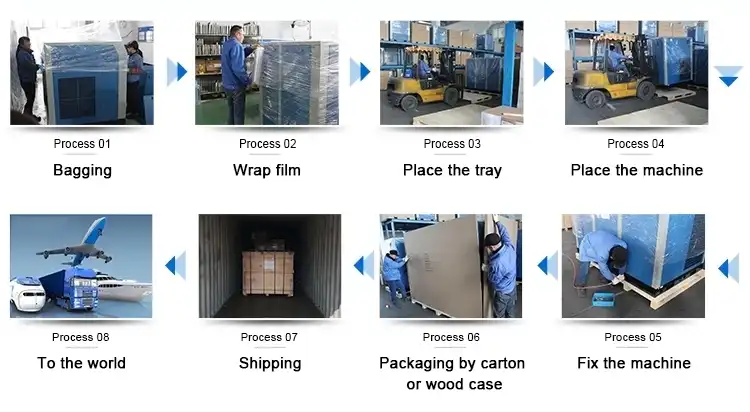
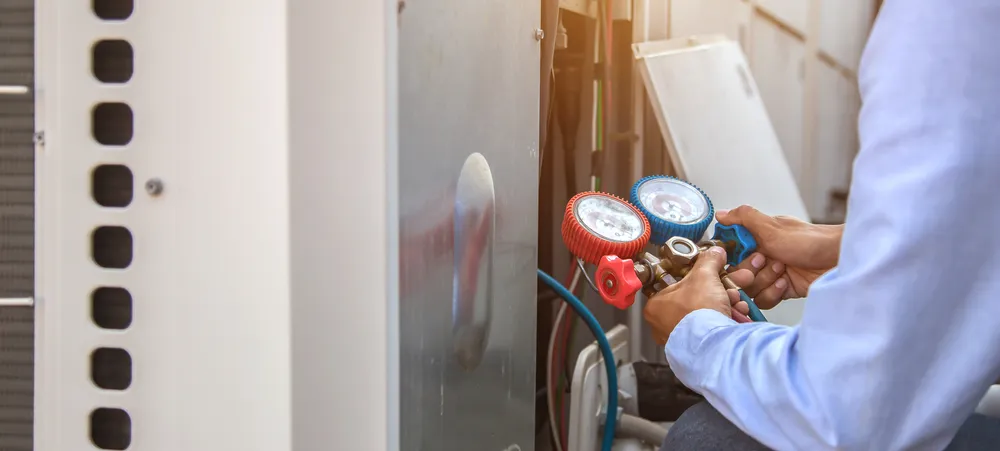
WorkShop

8. Related Products & One-Stop Supply
Beyond the EP-L5.5-40/8 itself, our manufacturing portfolio extends to several product families that integrate directly with reciprocating compressor installations. Procuring from a single supplier simplifies vendor qualification, shortens lead times, and ensures electrical and mechanical compatibility across the whole compressed-air system — advantages that procurement teams in France and across global industrial markets consistently cite as critical to their sourcing decisions.
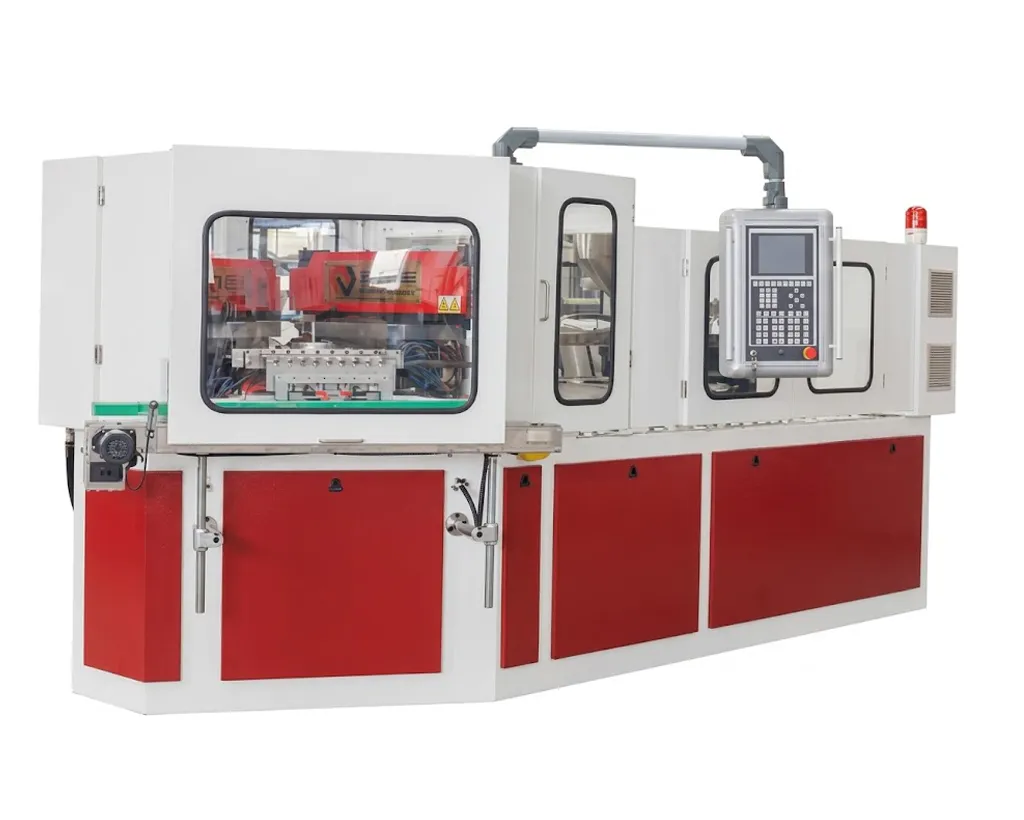
ISBM Machine — One-Step Injection Stretch Blow Moulding
For beverage and personal-care packaging producers who use the EP-L5.5-40/8 as their primary blow-air supply, pairing the compressor with an ISBM machine from our production range delivers a fully matched, single-source system. Bottle quality depends heavily on air pressure consistency and volumetric delivery rate — parameters this compressor holds stable across extended production runs. System-level supply also means a single technical contact for installation, commissioning, and future upgrades.
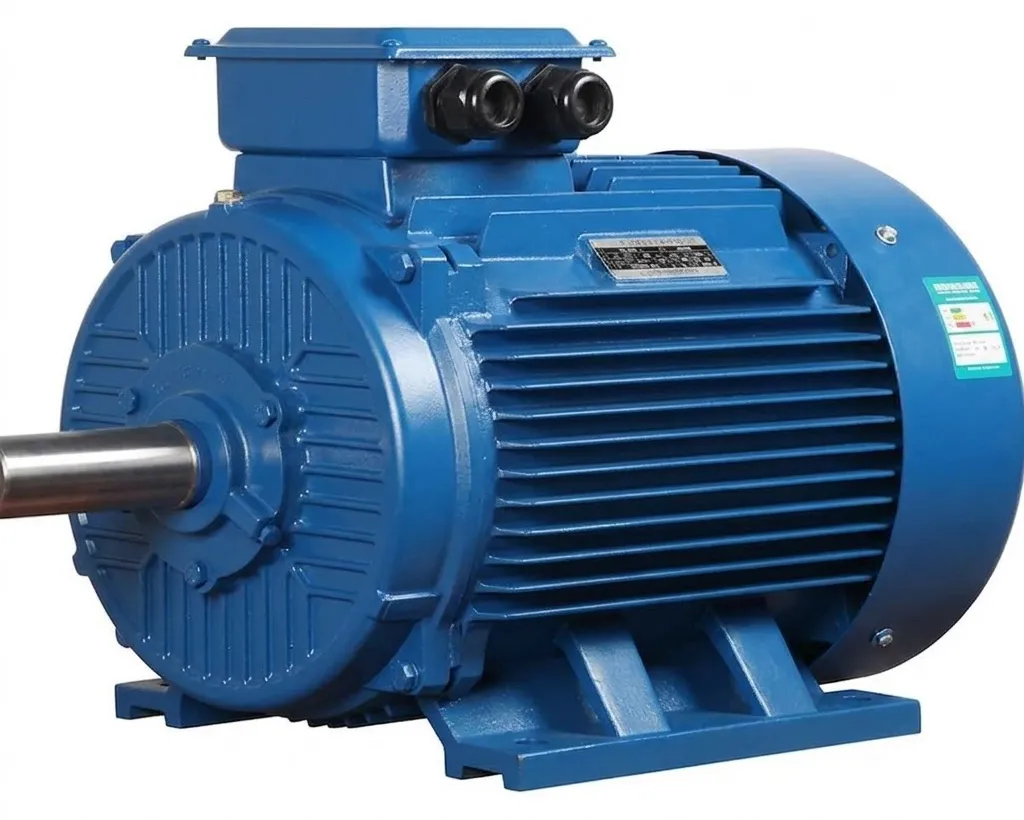
Three Phase Asynchronous Motor
The 240 kW drive motor fitted to the EP-L5.5-40/8 is a three-phase asynchronous motor, available in our standard production range across IE3 efficiency classification. Sourcing the motor from the same manufacturer as the compressor eliminates flange mismatch and shaft coupling compatibility risks. Our motor series covers the complete compressor power spectrum — from the smallest 13 kW recip compressor drives through to 10,000 kW process compressor packages — giving buyers continuity of spare-parts and documentation across their entire compressed-air plant fleet.
Frequently Asked Questions
Q1. What is the main function of a reciprocating air compressor in a large industrial plant? ▼
Q2. How does a reciprocating air compressor compare to a rotary screw compressor for high-volume European manufacturing? ▼
Q3. What are the most common disadvantages of reciprocating compressors and how are they managed in the EP-L5.5-40/8? ▼
Q4. Which reciprocating air compressor oil specification should I use for the L5.5-40/8 in a hot-climate installation? ▼
Q5. What size industrial air compressor do I need to run a high-speed PET blow moulding line in a packaging plant? ▼
Q6. How often do reciprocating air compressor parts need to be replaced under continuous industrial use? ▼
Q7. When should I choose a single acting reciprocating air compressor versus a double-acting design for my facility? ▼
Editor: PXY