
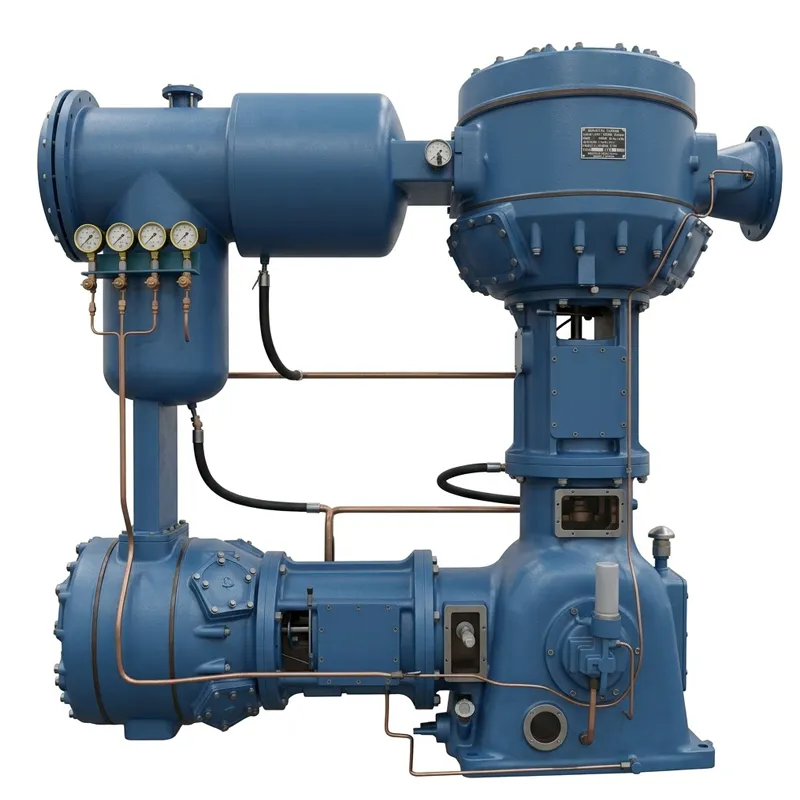
EP-LW-42/7-A Oil Free Air Compressor
The EP-LW-42/7-A Oil Free Air Compressor delivers 42 m³/min at 0.70 MPa. Driven by a 240 kW motor, it features a robust cast-iron construction and PTFE/carbon piston seals to guarantee ISO 8573-1 Class 0 oil-free air. Available in 380 V, 6 kV, or 10 kV configurations, this unit is engineered for continuous operation in critical industries like pharmaceuticals, food processing, and power generation.
EP-LW-42/7-A Oil Free Air Compressor
The EP-LW-42/7-A oil free air compressor is a two-column, two-stage industrial reciprocating oil free air compressor unit engineered for continuous-duty service in applications where compressed air must remain completely free of hydrocarbon contamination. Rated at 42 m³/min free air delivery and a working pressure of 0.70 MPa, this oil free air compressor occupies a well-defined position in the medium-to-large capacity segment. Selecting the right oil free air compressor for this capacity bracket requires careful attention to voltage, cooling method, and discharge pressure a well-defined position in the medium-to-large capacity segment of the industrial oil free air compressor market. This oil free air compressor is driven by a 240 kW (nominal 250 kW) motor and can be supplied for 380 V, 6 kV, or 10 kV grid connections — making this oil free air compressor compatible with both standard low-voltage industrial supplies and medium-voltage substations typical of large manufacturing plants, pharmaceutical facilities, and food processing complexes in France and across the European Union. As a purpose-built oil free air compressor, the EP-LW-42/7-A eliminates the need for downstream oil-removal filters, simplifying compressed-air system design and reducing total lifecycle cost; this is a core reason why buyers select an oil free air compressor over lubricated alternatives fitted with coalescing filtration trains.
1. Technical Specifications — EP-LW-42/7-A
The table below summarises the full rated performance data for the EP-LW-42/7-A oil free air compressor. Parameters are stated at ISO 1217 standard inlet conditions unless otherwise noted. Buyers in France and across the EU specifying this oil free air compressor should note that pressure vessels connected to this oil free air compressor must comply with the Pressure Equipment Directive 2014/68/EU (PED) and carry CE marking. In the USA, ASME Section VIII applies to connected vessels, and OSHA 29 CFR 1910.169 governs compressed air use in general industry.
| Parameter | Value | Notes |
|---|---|---|
| Model | EP-LW-42/7-A | Oil-free lubrication series |
| Cylinder Arrangement | Two-column, Two-stage (二列二级) | Double-acting reciprocating piston |
| Free Air Delivery (FAD) | 42 m³/min | ISO 1217 conditions |
| Discharge Pressure (rated) | 0.70 MPa (≈ 7 bar / 101.5 psi) | Adjustable within design limits |
| Motor Power | 240 kW (nominal 250 kW) | Three-phase asynchronous motor |
| Supply Voltage | 380 V / 6 kV or 10 kV | Customer-specified at order |
| Overall Dimensions (L×W×H) | 2890 × 1600 × 2190 mm | Without ancillary pipework |
| Machine Weight | 5.00 t | Dry weight; excl. cooler |
| Cooling Method | Air-cooled (forced) or water-cooled (optional) | Specify at order |
| Lubrication Type | Oil-free (PTFE/carbon ring piston seals) | Zero oil in compressed air |
| Noise Level (reference) | ≤ 80 dB(A) at 1 m | Free-field; may vary by installation |
| Ambient Temperature Range | 5 °C to 40 °C | Standard; contact us for non-standard climates |
| Quality Certification | ISO 9001; ISO 8573-1 Class 0 | Oil content verifiable to Class 0 |
2. How the EP-LW-42/7-A Oil Free Air Compressor Works
The EP-LW-42/7-A is a two-stage, double-acting reciprocating oil free air compressor. In a two-stage machine, atmospheric air first enters the low-pressure (LP) cylinder where it is compressed from approximately 1 bar absolute to an intermediate pressure — typically around 2.5–3 bar — before being cooled in an intercooler. The partially compressed, cooled air then passes into the high-pressure (HP) cylinder where it is compressed further to the rated discharge pressure of 0.70 MPa. This staged approach reduces the temperature rise across each cylinder, improving volumetric efficiency and extending seal life compared with a single-stage machine of equivalent discharge pressure.
What fundamentally distinguishes this oil free air compressor from conventional lubricated reciprocating compressors is the piston-ring and piston-rod-seal arrangement. Rather than relying on crankcase oil migrating up the cylinder walls to form a lubricating film — which inevitably leaves trace hydrocarbon contamination in the delivered air — the EP-LW-42/7-A uses self-lubricating PTFE composite rings and carbon-filled polymer rod packings. These materials have sufficient inherent lubricity to function without any oil addition, and they are dimensionally stable across the operating temperature range encountered in a two-stage compressor. The crankcase still contains lubricating oil for bearing and crankshaft lubrication, but a labyrinth distance piece and wiper-ring assembly on each piston rod physically separates the oil environment below from the gas compression environment above, ensuring that oil cannot enter the air stream under any operating condition.
Two-column arrangement means the two LP and two HP cylinders are arranged symmetrically on either side of the crankshaft. This symmetry reduces the inherent vibration forces transmitted to the foundation compared with a single-column machine of the same capacity, an important practical consideration for facilities installing this oil free air compressor on upper floors, mezzanines, or adjacent to process areas where vibration from the oil free air compressor must be controlled, mezzanines, or in buildings with noise or vibration sensitivity. The forced-air cooling system removes compression heat from the cylinder jackets and intercooler stages, maintaining safe operating temperatures without requiring a dedicated cooling water circuit — although a water-cooled variant is available for sites where cooling water is already available and where lower outlet temperatures are required.
3. Five Key Product Advantages
The design of this oil free air compressor delivers compressed air certified to ISO 8573-1 Class 0 — meaning zero detectable oil content in the delivered gas. This air purity is a fundamental attribute of the oil free air compressor design, not achieved through downstream filtration but through the fundamental machine architecture: PTFE composite piston rings and labyrinth-separated crankcase. For industries where a single drop of oil contamination can invalidate an entire production batch — pharmaceutical tableting, food-grade packaging, medical device manufacturing, and semiconductor fabrication — this eliminates the residual risk that always remains in a well-maintained lubricated compressor with coalescing filters. Facilities operating under EU Good Manufacturing Practice (GMP) guidelines, French ANSM pharmaceutical regulations, or US FDA 21 CFR Part 211 can document zero oil carry-over without relying on filter-change compliance as a control measure.
At 42 m³/min, the EP-LW-42/7-A sits at a capacity point where many facilities must otherwise install multiple smaller oil free air compressor units in parallel — incurring additional control complexity, more foundation anchor points, and higher combined footprints. A single large reciprocating unit simplifies the compressed-air distribution header design, reduces the number of pressure safety valves and isolating valves that require periodic inspection, and concentrates maintenance activity on one machine rather than a rack of smaller ones. This is particularly relevant in French and EU industrial facilities with strict workplace inspection regimes under ATEX or pressure equipment inspection rules, where fewer certified pressure vessels in the system means lower annual inspection overhead.
The motor can be specified for 380 V, 6 kV, or 10 kV supply — covering the full range of industrial electrical infrastructure from standard European LV panels through to the MV switchgear found in large petrochemical and power generation plants. This is a practical advantage in greenfield projects where the site electrical design is still in development: the oil free air compressor specification can be locked in advance while the motor voltage is being finalised. Engineers specifying an oil free air compressor early in a project benefit significantly from this flexibility while the motor voltage is finalised later. It is equally useful in retrofit situations where the existing compressed air hall is served by 6 kV or 10 kV bus bars that a 380 V machine could not connect to without a dedicated step-down transformer — an expensive additional civil and electrical works item.
PTFE composite piston rings in an oil free air compressor of this type typically achieve 8,000–15,000 hours of service. This characteristic interval makes maintenance planning for an oil free air compressor highly predictable typically achieve 8,000–15,000 hours of service before requiring replacement, depending on inlet air quality, operating pressure, and thermal cycling. Because the rings run dry — no oil bath, no oil filter changes, no oil separation elements — the consumables list is shorter than for an equivalent lubricated machine. For this oil free air compressor, the main scheduled items are piston rings, rod packing sets, suction and discharge valves, and bearing lubricant changes. Reduced consumable spend is particularly relevant in regions with high lubricant pricing or constrained supply chains, and it directly supports the lower total cost of ownership argument that operators in France and across Western Europe increasingly use when justifying a higher capital outlay on an oilless air compressor versus a lubricated alternative.
The two-stage compression cycle with intercooling reduces the work of compression compared with achieving 0.70 MPa in a single stage. In thermodynamic terms, the isothermal efficiency of a two-stage machine approaches the theoretical optimum more closely than a single-stage unit at the same pressure ratio, which translates into lower energy consumption per cubic metre of air delivered. For an industrial air compressor running 8,000 hours per year at 240 kW, even a modest 5% improvement in isothermal efficiency represents a meaningful energy saving annually. This matters in France, where electricity costs for industrial consumers are significant and where facilities subject to the EU Energy Efficiency Directive (EED) must demonstrate continuous improvement in energy intensity. The two-stage design of this oil free air compressor contributes directly to an operator’s EED compliance reporting — quantifiable benefits that help justify the procurement of an oil free air compressor over a less-efficient lubricated alternative in any energy audit submission.
4. Materials & Construction
The construction of the EP-LW-42/7-A oil free air compressor, like all machines in this oil free air compressor product family, reflects the dual requirement for structural reliability under cyclic pressure loads and chemical compatibility with process air streams that must remain hydrocarbon-free. The cylinder block and crankcase are manufactured from pearlitic grey cast iron (GG-25 equivalent), a material chosen for its excellent damping properties, good thermal conductivity, and established machinability to the fine bore tolerances that oil-free piston operation demands. Cast-iron cylinders offer predictable thermal expansion behaviour across the temperature range encountered in a two-stage compressor — an important consideration because oil-free piston ring sealing depends on maintaining consistent bore-to-ring clearances throughout the operating cycle.
Pistons are cast from aluminium alloy, significantly reducing the reciprocating mass compared with steel pistons and thereby lowering the dynamic bearing loads on the crankshaft. The piston rings themselves are PTFE-compound composites — typically glass-filled or carbon-filled PTFE grades selected for their tribological stability in dry contact with the cast-iron bore. Carbon-graphite rod packing rings on each piston rod provide the gas-tight seal between the compression cylinder and the oil-wetted crankcase environment, eliminating any oil migration path without requiring external sealing air purges. The crankshaft is a forged steel component, precision-ground and balanced, with white-metal plain bearings or rolling-element bearings depending on the design load, while connecting rods are steel forgings with precision-bored small-end bushings. The suction and discharge valves — the components most sensitive to wear and contamination in any reciprocating oil free compressor — and particularly in an oil free air compressor where no compensating oil film is present — are stainless steel ring-type or plate-type valves, corrosion-resistant and compatible with humid compressed air. External piping connections are flanged to EN 1092-1 or ASME B16.5 standards on request, enabling direct integration into European or North American process piping systems without custom adapter fittings. All materials in contact with the process air stream comply with RoHS restrictions and are free from REACH substances of very high concern (SVHCs), supporting procurement under the EU’s REACH Regulation 1907/2006.
5. Application Scenarios
The EP-LW-42/7-A oil free air compressor is engineered specifically for industrial processes where air quality, reliability, and capacity all matter. Below are the primary sectors where this oil free air compressor delivers measurable operational value and where the zero-contamination guarantee of an oil free air compressor is a genuine commercial and regulatory differentiator.
Tablet presses, capsule fillers, blister-packaging lines, and sterile filling operations all require compressed air that carries no risk of oil contamination — even at parts-per-billion levels. This oil free air compressor provides air that satisfies EU Annex 1 GMP requirements for compressed gases used in sterile manufacturing and supports validation under USP <1072> in North American regulatory contexts. French ANSM-licensed manufacturers and EMA-regulated facilities specify an oil free air compressor precisely to avoid the additional validation burden of demonstrating filter efficacy each production campaign.
Pneumatic conveying of powders, aeration in fermentation vessels, CO₂ substitution in modified atmosphere packaging, and direct-contact blow-moulding applications in beverage container production all demand guaranteed oil-free air. The oil free air compressor permanently eliminates hydrocarbon tainting risk from the product-contact air stream and simplifies HACCP documentation. Buyers of an oil free air compressor for food applications also benefit from reduced annual third-party audit scope. from the product contact air stream and simplifies HACCP documentation. With the EU Food Safety Regulation 178/2002 and French Décret 2011-48 in force, food producers rely on oil-free machines to remove a significant contamination pathway from their hygiene risk register entirely. The 42 m³/min capacity is well-suited to large-format beverage filling lines and multi-line food packaging halls.
One-step and two-step ISBM (injection-stretch-blow-moulding) systems require high-volume, contaminant-free compressed air at moderate pressures for the pre-blow stage. The 42 m³/min FAD and 0.70 MPa discharge pressure of this oil free air compressor match the pre-blow requirements of medium-to-large single-stage blow moulding lines directly. Oil contamination in the blow-moulding air stream deposits on the mould cavity surfaces and the inner wall of the preform during blowing — a quality defect that causes product rejection and mould cleaning downtime. An oil free air compressor at source prevents this problem entirely, delivering operational simplicity that oil-laden air with downstream filtration cannot match.
Gas turbine pneumatic controls, instrument air systems for power station distributed control systems (DCS), and service air for cooling tower pneumatic actuators all require compressed air meeting ISA-S7.3 instrument-quality standards. An oil free air compressor at this scale delivers the base air quality needed for instrument air systems without requiring a dedicated oil-removal filter train. Specifying an oil free air compressor for power station instrument air also removes the filter-failure failure mode from the safety case. for instrument air systems without requiring a dedicated oil-removal filter train — a simplification that reduces the number of potential failure modes in safety-critical control air services. The multi-voltage supply option of the EP-LW-42/7-A makes it compatible with power plant MV distribution systems (6 kV, 10 kV) without a step-down transformer.
In process plants handling flammable or reactive chemical intermediates, oil traces in a compressed air stream can initiate unintended reactions or pose a fire risk in air-actuated systems downstream of heat exchangers. An oil free air compressor of this scale provides the instrument and utility air volumes required by a mid-size chemical production unit while keeping the compressed air specification clean enough for direct process use in purging, pressure-testing, and pneumatic actuation. The robust two-stage reciprocating design is also well-suited to the continuous-running duty cycles of chemical plant utilities, where downtime directly interrupts production revenue.
Hospital compressed-air infrastructure, dental clinic central supply systems, and medical device testing rigs all specify oil-free machines under EN ISO 7396-1 (medical gas pipeline systems) and HTM 02-01 (UK) / NF S 90-155 (France) medical gas pipeline standards. A best oil free air compressor at this capacity can serve multiple centralised hospital compressed-air zones. When sizing an oil free air compressor for medical gas infrastructure, the design should follow EN ISO 7396-1 guidance. When sizing an oil free air compressor for medical gas infrastructure, the design should follow EN ISO 7396-1 guidance on redundancy and standby capacity. multiple centralised hospital compressed-air distribution zones or a complete dental clinic building from a single machine — a configuration that is increasingly favoured over individual room-level compressors for whole-life cost and maintenance simplicity. The oil free air compressor dental and medical market is one where zero oil contamination is not just preferred but legally mandated in most EU jurisdictions.
6. Regulatory Compliance — France & Global Markets
Procurement and installation of an oil free air compressor at industrial scale is a regulated activity is subject to a layered set of regulations that vary by jurisdiction. The following overview covers the key frameworks relevant to buyers in France and other major markets.
European Union / France: The Pressure Equipment Directive 2014/68/EU (PED) governs pressure-containing components; a connected air receiver vessel must carry CE marking and a Declaration of Conformity. In France, periodic inspection of pressure equipment is required under the arrêté du 20 novembre 2017. The EU Machinery Directive 2006/42/EC covers the assembled compressor as a machine. Noise emission declarations under Directive 2000/14/EC (outdoor equipment — relevant if the unit is installed in a partially open building or temporary enclosure) require measurement per EN ISO 3744. ATEX Directive 2014/34/EU applies if the unit is installed in an area classified for explosive atmospheres — though oil-free reciprocating compressors are often outside ATEX scope if the compressed gas is clean air, local ATEX assessment must confirm zone classification. The EU Energy Efficiency Directive (EED) 2012/27/EU and its successors require large industrial energy consumers to conduct energy audits; an industrial oil free air compressor of this size is a significant audit item. The two-stage thermodynamic efficiency of this oil free air compressor is directly documentable against CEE savings certificates.
United States: ASME Section VIII governs pressure vessel design for connected receivers. OSHA 29 CFR 1910.169 addresses air receiver requirements. The Compressed Air Challenge guidelines, though voluntary, are widely referenced by US energy auditors. EPA regulations may apply if the compressor is used in certain process industries subject to air quality permits.
Australia: AS/NZS 1200 (pressure equipment) and the model Work Health and Safety laws govern pressure vessel and machinery installation. Each state has its own registration requirements for pressure vessels above certain design pressure × volume thresholds.
Japan / South Korea / India: These markets each have national standards (JIS B 8341, KS B 6303, IS 5456 respectively) covering reciprocating compressors. Import of this oil free air compressor to any of these markets should be preceded by confirming the applicable national type-approval or self-certification route with our export compliance team.
7. Oil Free Air Compressor vs Oil Lubricated — Which Is Right for You?
One of the most common procurement questions is whether an oil free air compressor vs oil lube air compressor is the right choice for a given application. The answer hinges on end-use requirements and total lifecycle economics rather than simply on the capital price difference. The comparison below sets out the key factors that distinguish the two categories.
| Factor | Oil Free Air Compressor | Oil-Lubricated Compressor |
|---|---|---|
| Air purity | ISO 8573-1 Class 0 achievable at source | Requires coalescing + activated carbon filtration |
| Operating cost | No oil consumables; lower filter replacement cost | Regular oil, oil filter, separator element changes |
| Capital cost | Higher initial investment | Lower purchase price |
| Regulatory compliance | Simplified — no oil filtration validation | Requires filter-efficacy documentation |
| Applications | Pharma, food, medical, electronics | General workshop, pneumatic tools |
For the vast majority of process industries — and certainly for pharmaceutical, food, medical device, and specialty chemical production — the best oil free air compressor solution is the one that eliminates the contamination risk at source rather than managing it downstream. The EP-LW-42/7-A is engineered precisely for this positioning in the oil free air compressor vs oil debate.
8. About Us
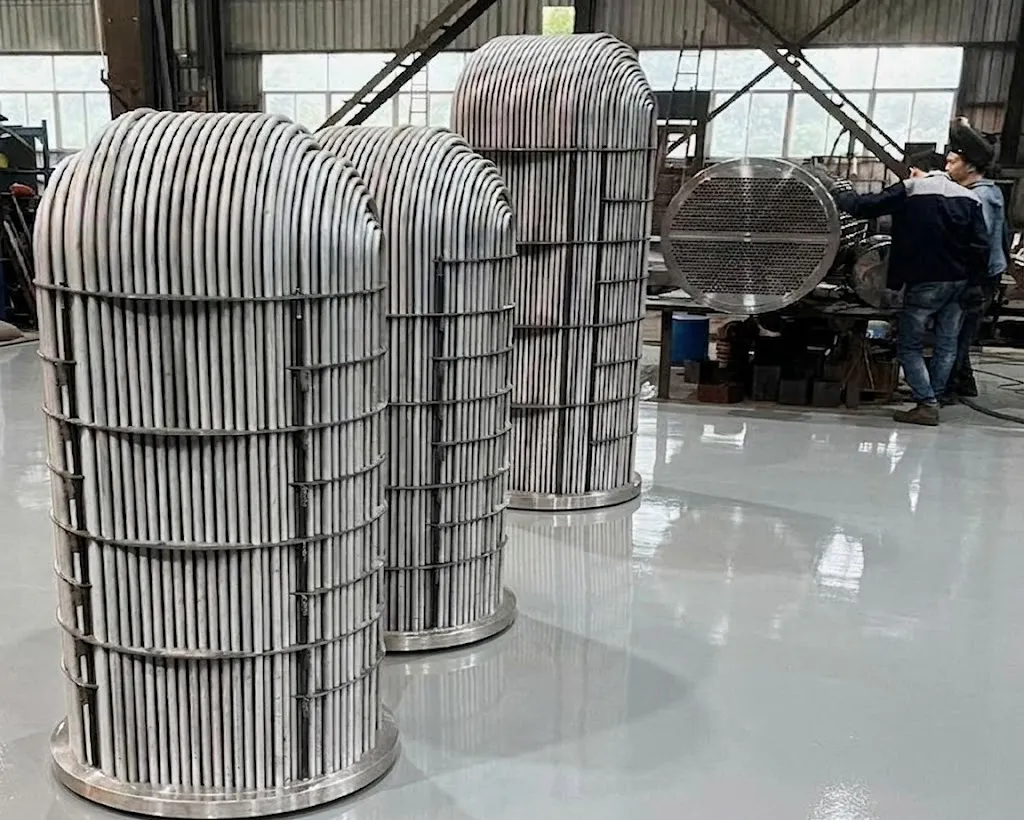
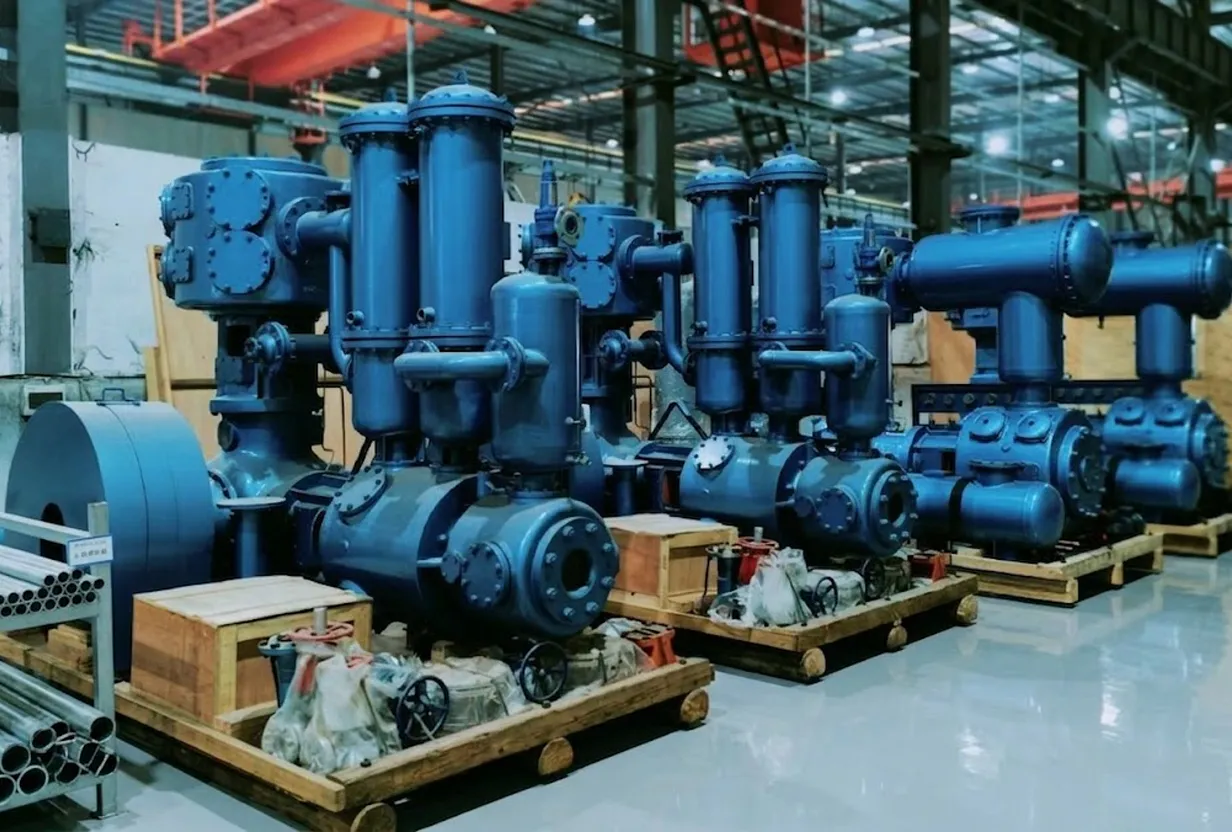
We hold ISO 9001 certification for our quality management system, compressor production licences, and Class I/II pressure vessel design and fabrication licences — credentials that allow us to design, build, and certify both the compressor and the pressure vessel components of a complete compressed-air installation as a single-source supplier. Our oil free air compressor product range — one of the most comprehensive oil free air compressor catalogues available from a single manufacturer — spans capacities from 1.5 m³/min to 300 m³/min, discharge pressures from 0.5 to 5.0 MPa, and single-machine motor powers from 11 kW to 2000 kW, enabling us to serve laboratory-scale, process-scale, and utility-scale oil-free compression requirements from a single catalogue.
We are also one of the few oil free air compressor manufacturers globally that produces the full range of compressor types in-house — meaning we can match the right compression technology to each customer’s oil free air compressor requirement rather than defaulting to a single product type. that produces the full range of compressor types in-house — reciprocating, screw, and membrane — allowing us to match the right compression technology to each customer’s application rather than defaulting to a single product type.
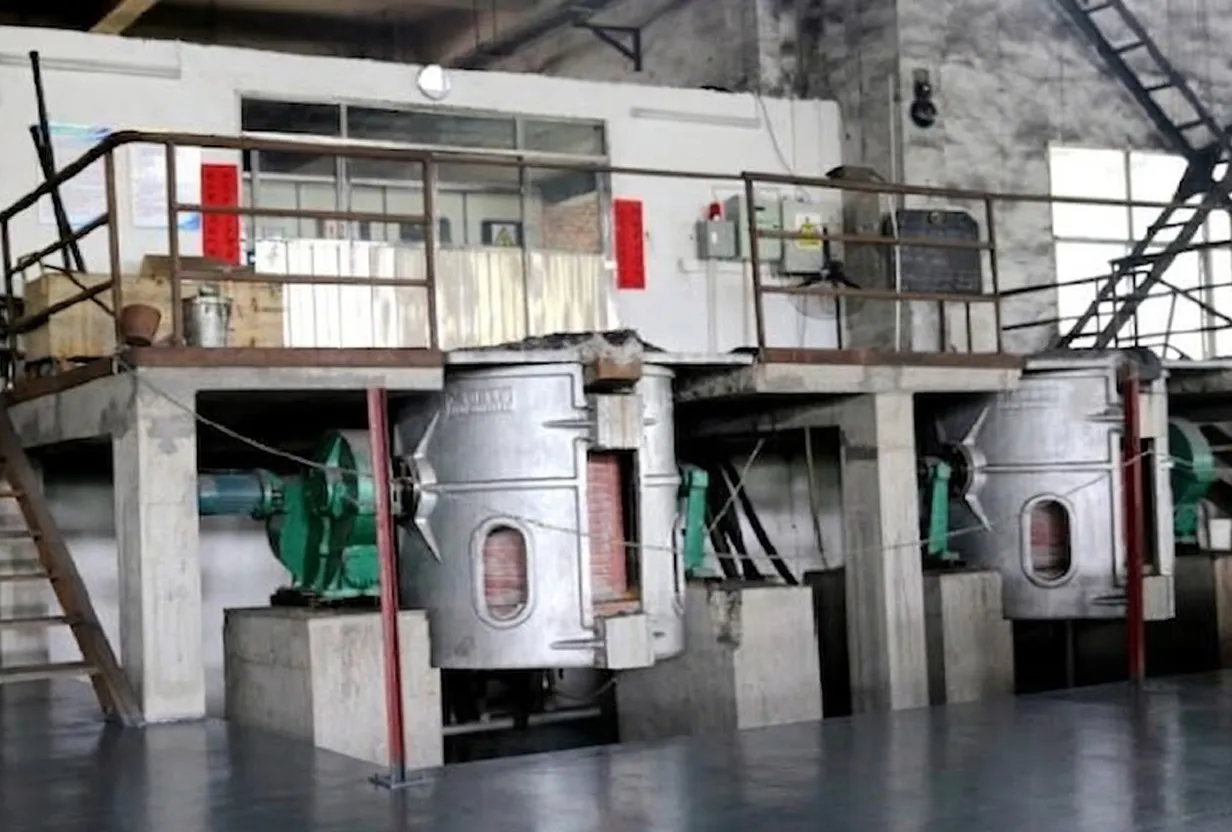
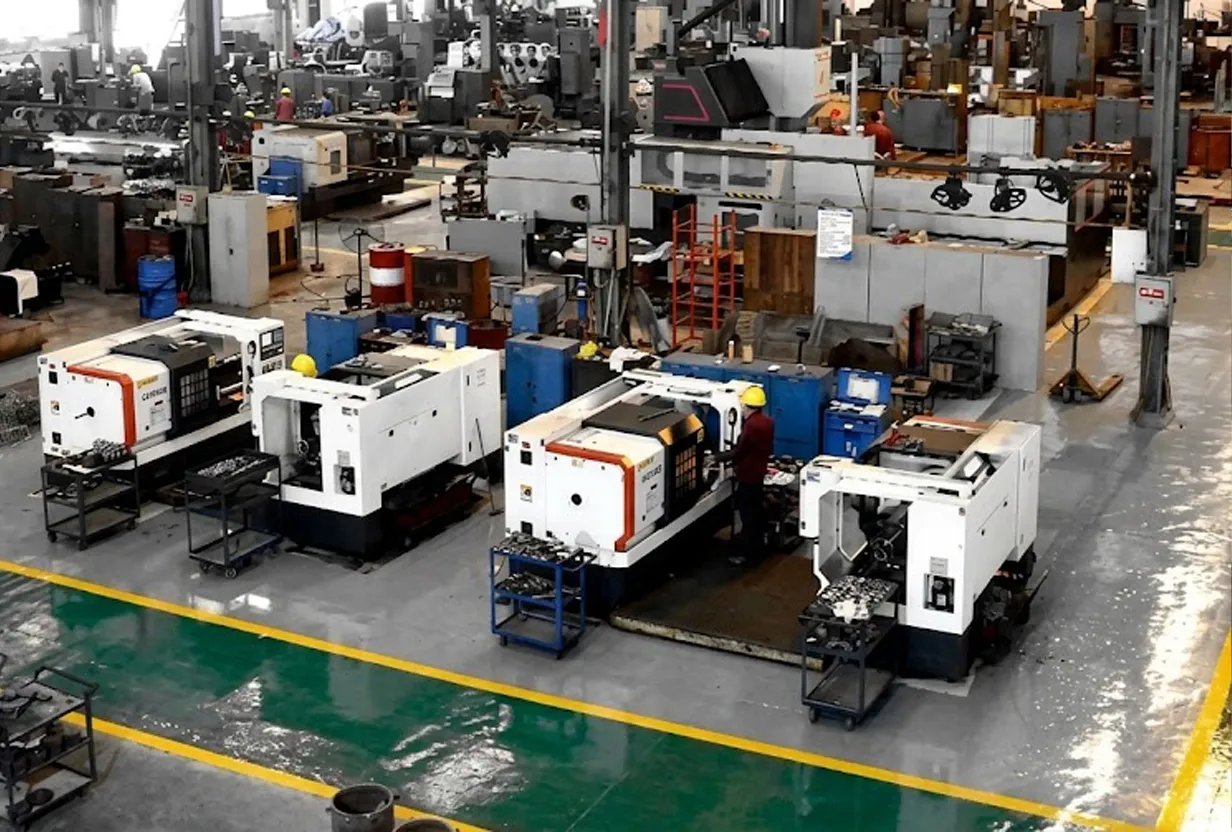
WorkShop
9. Related Products & System Compatibility
A complete compressed-air system includes more than the oil free air compressor alone. The following complementary products pair directly with the EP-LW-42/7-A to form an integrated, one-stop supply arrangement — simplifying procurement, ensuring technical compatibility, and reducing logistical overhead for project managers and plant engineers alike.
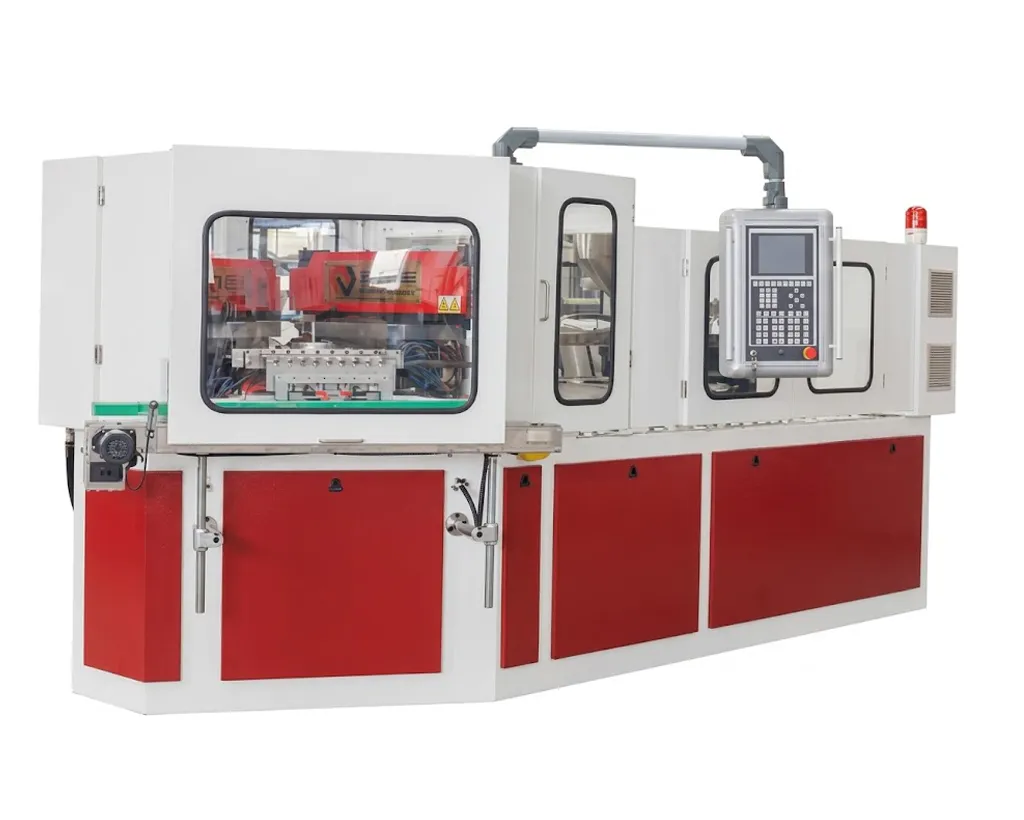
For customers in PET packaging and beverage container production, this oil free air compressor at 42 m³/min and 0.70 MPa is a direct match for the pre-blow air requirements of an ISBM machine (injection-stretch-blow-moulding). The zero-oil air eliminates mould contamination and inner-wall deposit issues that degrade bottle clarity in lubricated-compressor-fed blow lines. Sourcing both the oil free air compressor and the blow-moulding machine from a common affiliated supply network removes interface risk. Customers who already operate an ISBM line and are looking to upgrade their compressed-air supply to an oil free air compressor will find this a natural one-stop source. from a common affiliated supply network removes interface risk and supports a single-supplier relationship for the core of the production line.
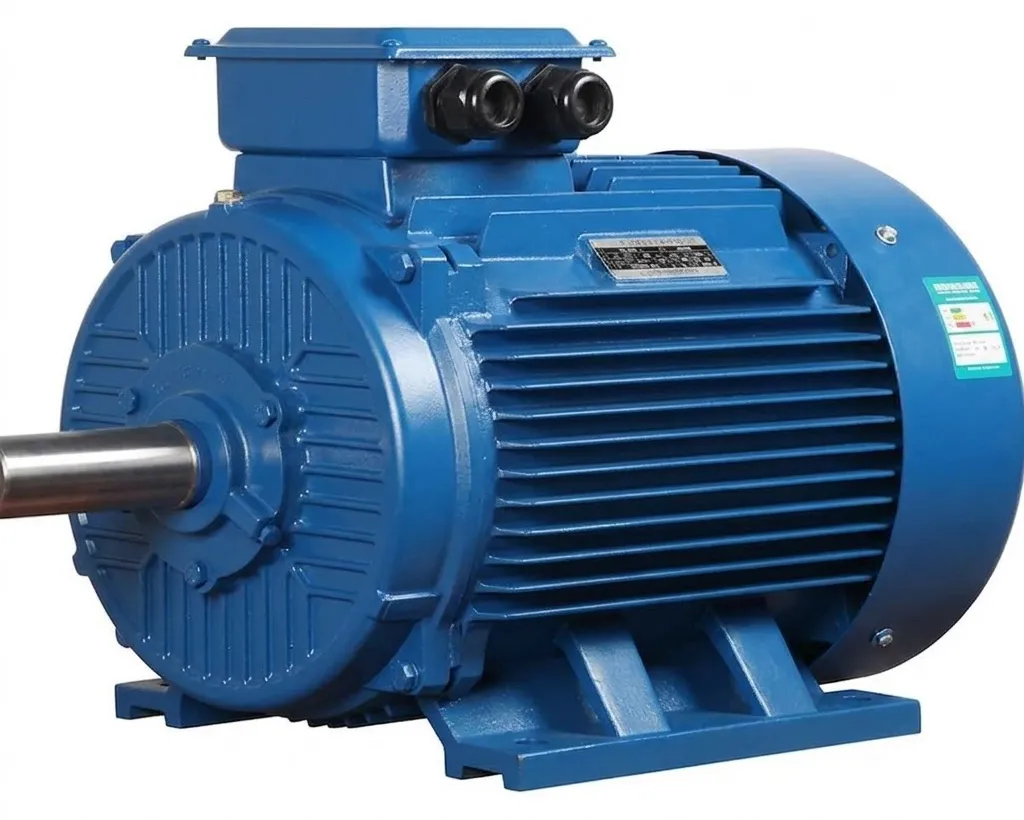
The EP-LW-42/7-A drive motor is a three-phase asynchronous unit rated at 240 kW / 250 kW nominal. When a motor replacement or efficiency upgrade is required — for instance, to meet IE3 or IE4 class requirements under EU Regulation 2019/1781 — sourcing the replacement from the same production ecosystem ensures dimensional compatibility, reduces lead time on spare parts, and supports a single documentation package. Our Three Phase Asynchronous Motor range covers the frame sizes and power ratings used across the EP oil free air compressor product family. Contact our technical team for a quotation referencing the compressor serial number to confirm the correct motor specification.
Frequently Asked Questions
Q1. What is an oil free air compressor and how does it differ from a standard lubricated compressor used in industrial facilities?
An oil free air compressor compresses air using piston rings, rotor coatings, or scroll wraps that require no lubricating oil in contact with the process gas. This is achieved through self-lubricating materials such as PTFE composites, carbon, or PEEK rather than oil-bath lubrication. The fundamental difference from a lubricated machine is that no oil can enter the compressed air stream in an oil free air compressor under any operating condition — the ISO 8573-1 Class 0 certification confirms this. A lubricated compressor relies on downstream filtration to remove oil aerosols and vapour, but these filters can fail, become saturated, or be incorrectly serviced, always leaving a residual contamination risk that an oil free air compressor eliminates by design. This is the primary technical argument for specifying an oil free air compressor in any process where air purity is safety-critical.
Q2. How do I get a quote for the EP-LW-42/7-A oil free air compressor for my pharmaceutical manufacturing plant in France?
To receive a formal quotation for this oil free air compressor tailored to your French pharmaceutical facility, please use the contact form on this page and include: your required free-air delivery volume (m³/min), working pressure (MPa or bar), supply voltage available at the installation point, preferred cooling method (air or water), and any special requirements such as ATEX zone classification, low-noise enclosure, or outdoor installation. Our French-market export team will prepare a technical proposal within 3–5 working days including CE conformity documentation references and applicable PED classification for the connected receiver vessel.
Q3. What are the main spare parts that need replacing during regular maintenance of a large industrial oil free air compressor?
The primary scheduled wear items in a reciprocating oil free air compressor of this type are: PTFE composite piston rings (typically replaced every 8,000–15,000 operating hours), carbon-graphite rod packing rings (similar interval), suction and discharge stainless steel valves (inspect at 4,000 h, replace as condition warrants), crankcase bearing lubricant (changed annually or per operating hours recommendation), and air filter elements (replaced per differential pressure indicator). We supply a full range of oil free air compressor spare parts for the EP series, ensuring that operators of any EP oil free air compressor model have access to OEM-specification replacement components throughout the machine’s operating life. for the EP series, available ex-stock for planned maintenance and on express lead times for unplanned replacements. Maintaining a recommended on-site spare-parts kit is strongly advised for production-critical installations.
Q4. Which oil free air compressor capacity and pressure rating do I need for a food-grade pneumatic conveying system in a European bakery?
For a bakery pneumatic conveying system, the key parameters are: the conveying air volume required (which depends on pipe bore, transport distance, and product bulk density), the pressure drop across the conveying line (typically 0.3–0.7 bar for a dilute-phase system of moderate length), and the continuous versus intermittent duty profile. A 42 m³/min oil free air compressor at 0.70 MPa like the EP-LW-42/7-A is appropriate for a large-scale bakery with multiple simultaneous conveying circuits, or for a central utility serving several production lines. Smaller capacity machines in the EP range are available for single-line installations. We recommend our application engineers carry out a conveying system sizing review before confirming the specification — this is a free service we offer to serious enquiries.
Q5. How much energy does an industrial oil free air compressor rated at 240 kW consume annually, and what efficiency standards apply in France?
At 240 kW rated motor power, operating 8,000 hours per year at 85% average load factor, annual energy consumption is approximately 240 × 0.85 × 8,000 = 1,632,000 kWh — roughly 1.6 GWh per year. At typical French industrial electricity tariffs, this is a significant operating cost item. France’s transposition of the EU Energy Efficiency Directive through the Programme des certificats d’économies d’énergie (CEE) means large energy consumers are incentivised to demonstrate efficiency improvement. Two-stage compression with intercooling — as used in this oil free air compressor — delivers measurably better specific power consumption (kW per m³/min) than single-stage machines at the same discharge pressure, supporting your CEE reporting with documented energy savings versus a replaced single-stage unit.
Q6. What is the lead time and typical shipping cost for an oil free air compressor ordered from a manufacturer outside the EU for a site in France?
Standard production lead time for a configured EP-LW-42/7-A oil free air compressor is 10–14 weeks from confirmed order and receipt of initial payment. Ocean freight from our manufacturing facility to a French port (Le Havre or Marseille) adds approximately 4–5 weeks in transit, giving a typical door-to-site schedule of 14–19 weeks from order. Freight cost depends on Incoterms (CIF, FOB, DDP) and is quoted separately based on current shipping rates. Import duties under the EU Common Customs Tariff for air compressors (HS 8414.80) are 1.7% on CIF value; anti-dumping duties or other trade measures should be confirmed with your customs broker at the time of order. We work with established freight forwarders who specialise in heavy industrial equipment import into France and can coordinate pre-arrival technical documentation with the importer of record.
Q7. How does an oil free scroll compressor compare to this reciprocating oil free air compressor for a hospital medical gas system?
An oil free scroll compressor and a reciprocating oil free air compressor both achieve zero oil carryover in the compressed air, but they serve different capacity ranges and operational profiles. Scroll compressors excel at 1–30 kW power levels, offering very low noise (typically 60–65 dB(A)), compact footprint, and low vibration — making them ideal for smaller medical facilities, dental clinics, and laboratory environments. Reciprocating machines like the EP-LW-42/7-A are superior for capacities above 100 kW, where scroll geometry becomes impractical, and for high-pressure applications. For a large hospital with multiple theatre suites, a reciprocating oil free air compressor is the engineering-grade solution. The oil free air compressor base-load unit, intensive care units, and ward compressed-air drops, a reciprocating oil free air compressor of this scale is the engineering-grade solution, while scroll machines might serve satellite buildings or backup positions. A combined system using one reciprocating oil free air compressor as the base-load unit alongside scroll compressors for low-demand periods is also a recognised configuration in hospital energy efficiency programmes.
Q8. When is it worth upgrading from a lubricated screw compressor to an oil free air compressor for a beverage filling line in France?
The business case for upgrading from a lubricated screw compressor to an oil free air compressor on a French beverage filling line typically rests on three factors: (1) the cost and audit burden of maintaining and documenting the oil-removal filtration train required on the lubricated machine; (2) the potential liability exposure if oil contamination reaches a product batch; and (3) changes in regulatory context — for example, if a previously non-food-contact air use (e.g., pneumatic actuation) is reclassified as food-contact by an FSSC 22000 auditor. When you add up filter replacement costs, oil disposal costs, annual filter-efficacy testing, and the insurance premium difference associated with retaining a contamination risk, the upgrade to an oil free air compressor — specifically choosing this oil free air compressor over a filter-protected lubricated screw — often reaches payback within 4–7 years on a medium-scale filling line. We can prepare a detailed comparative cost model for your specific installation on request.
Q9. How do I compare the specific energy consumption of different oil free air compressor models when evaluating suppliers for a long-term procurement contract?
The standard metric for comparing oil free air compressor energy efficiency is specific power consumption, expressed in kW per m³/min of FAD at the rated discharge pressure. A lower specific power means more compressed air per unit of energy input. Request this specific power figure from all oil free air compressor suppliers you are evaluating, and verify that it is stated at the same inlet conditions (typically ISO 1217 standard atmosphere: 20 °C, 1 bar absolute, 0% relative humidity) and at the same discharge pressure. For two-stage machines at 0.70 MPa, a well-engineered oil free air compressor should achieve approximately 5.5–6.2 kW per m³/min — compare this against the suppliers’ quoted figures to identify the most efficient option. Also request the test certificate from an independent witness test to confirm the figure is real rather than a nameplate estimate, particularly for large capital procurements where the difference of 0.5 kW per m³/min compounds over years of operation into a very large energy cost differential.
Editor: PXY
Applications for Industrial Oil-Free Air Compressors
Oil-free compressed air is a powerful production method for companies that need to produce products with air purity and product safety in mind. Oil-free compressors are always ISO Class Zero certified and provide a 100% oil-free air supply for sensitive applications. Some industry application examples include:

- Automotive: Oil-free compressed air creates high-quality automotive paint finishes in a smooth process.
- Food and beverage: The oil-free approach creates healthier foods while also eliminating any possibility of oil contamination.
- Chemical: The chemical industry benefits from oil-free air compressors as these machines increase purity, reduce waste and increase safety.
- Electronics: Oil-free methods are critical for electronics as they provide uninterrupted control systems in ultra-clean conditions for the production of delicate devices such as motherboards.
- Pharmaceuticals: Oil-free air compressors reduce the risk of oil contamination in pharmaceutical products and help improve production efficiency.
When you want to produce products in environments where oil contamination can cause equipment damage or lead to costly damage and recalls, oil-free air compressors are the perfect solution to achieve the highest standards of air purity.
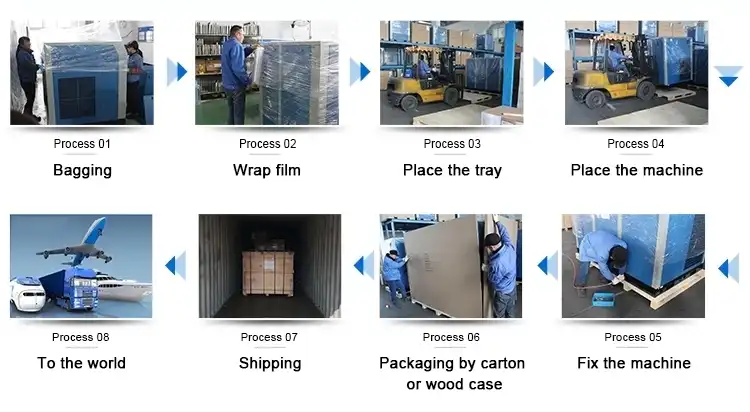
Packaging Process