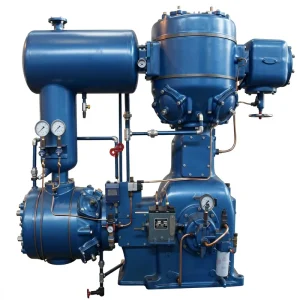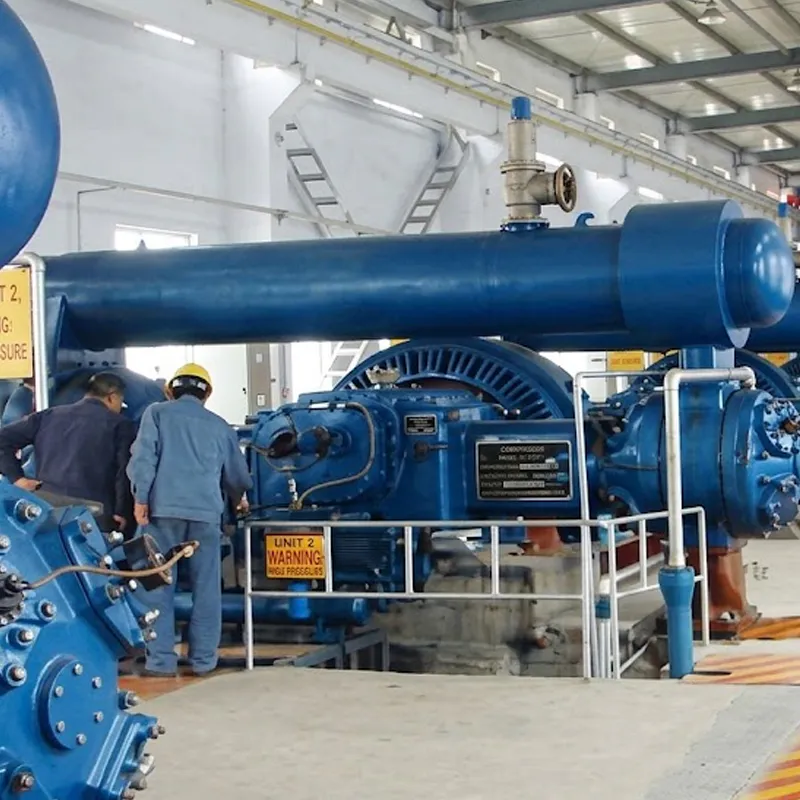
EP-2D12 Ⅲ-100/8 Reciprocating Air Compressor
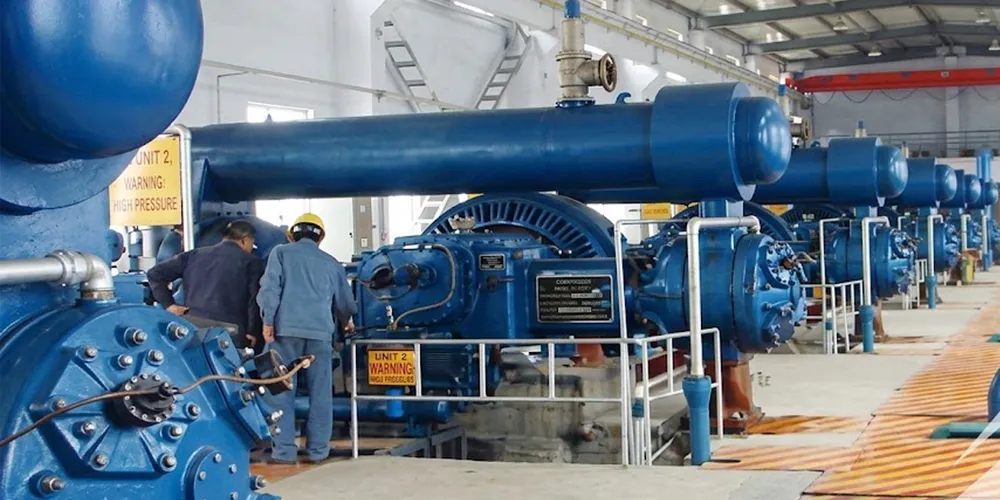
The EP-2D12 Ⅲ-100/8 reciprocating air compressor occupies the upper tier of the 2D-series range — a two-column, two-stage machine that delivers 100 m³/min of compressed air at a nominal working pressure of 0.8 MPa. At this output scale, the reciprocating air compressor transitions from plant utility equipment into a central process asset: its availability directly determines whether downstream production lines, pneumatic handling systems, or process instrumentation circuits can operate at full capacity. Plant managers considering this class of industrial reciprocating air compressor are therefore making a capital decision with multi-year reliability consequences, which is why the design, material specification, and manufacturing pedigree of the machine demand careful evaluation.
The 2D12(III) designation identifies a high-power, symmetrically balanced reciprocating air compressor frame. The two-column layout places cylinder banks on opposite sides of the crankshaft, achieving dynamic balancing that substantially reduces foundation-transmitted vibration compared with vertically or angularly arranged single-column designs. This characteristic makes the EP-2D12 Ⅲ-100/8 reciprocating air compressor particularly well-suited to facilities where vibration sensitive equipment such as analytical instruments, precision machining cells, or microelectronics manufacturing lines are co-located with the compressed air plant.
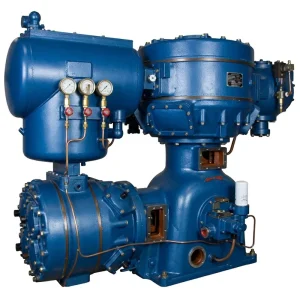
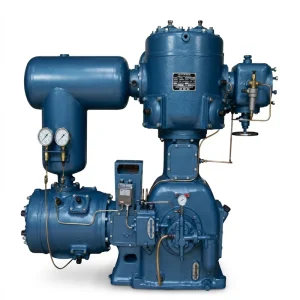
Reciprocating Air Compressor Series
EP-2D12 Ⅲ-100/8 Reciprocating Air Compressor
A large-capacity, two-column two-stage industrial reciprocating air compressor engineered for continuous heavy-duty service at scale. Rated at 100 m³/min free air delivery and 0.8 MPa discharge pressure, this reciprocating air compressor is the choice of plant engineers across France, Europe, and global process industries where sustained high-volume compressed air output is a fundamental operating requirement.
Pressure: 0.8 MPa
Power: 550 kW
Two-Stage / Two-Column
6 kV / 10 kV Supply
1. Technical Specifications
All performance values for the EP-2D12 Ⅲ-100/8 reciprocating air compressor are measured under standard inlet conditions as defined in ISO 1217 Annex C — the normative reference for volumetric compressor acceptance testing across EU member states, including France. These figures enable direct cross-comparison when evaluating competing reciprocating air compressor offers from different reciprocating compressor manufacturers during the procurement phase.
| Parameter | Value | Unit / Remark |
|---|---|---|
| Model | EP-2D12 Ⅲ-100/8 | Two-column, Two-stage |
| Free Air Delivery (FAD) | 100 | m³/min |
| Rated Discharge Pressure | 0.8 | MPa (≈ 8 bar g) |
| Drive Motor Power | 550 | kW |
| Supply Voltage | 6 kV or 10 kV | 3-Phase, 50 Hz |
| Compression Configuration | Two-column, Two-stage | Symmetrically balanced |
| Overall Dimensions (L×W×H) | 4622 × 3353 × 2535 | mm |
| Unit Weight | 10.50 | t (metric tonnes) |
| Number of Stages | 2 | Inter-stage cooled |
| Cooling Method | Water-cooled (standard) | Inter-stage and after-cooling |
| Lubrication System | Forced pressure-feed circuit | With oil filter and low-pressure trip |
| Noise Level (at 1 m) | ≤ 85 | dB(A) |
| Ambient Temperature Range | 5 – 40 | °C |
| Safety Relief Valve Setting | 1.1 × Rated Pressure | Per ISO 11011 / PED 2014/68/EU |
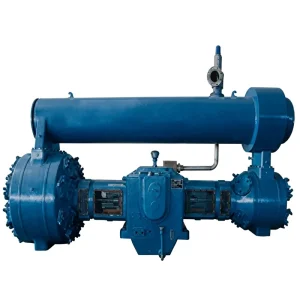
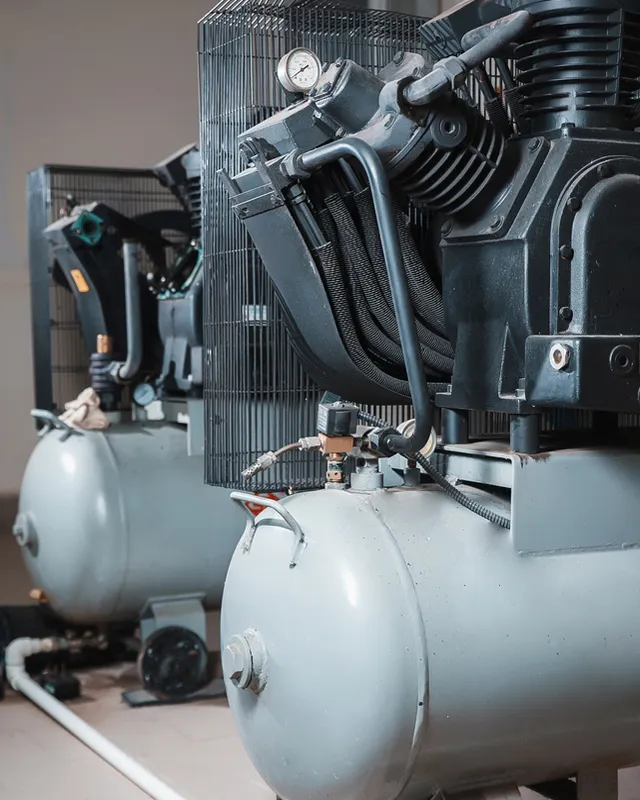
Single Stage Reciprocating Air Compressor
2. Five Key Competitive Advantages
What sets this reciprocating air compressor apart when plant engineers in France and globally evaluate large-capacity machines at the 100 m³/min duty level:
01 — Dynamically Balanced Two-Column Frame
The symmetrical opposed-cylinder arrangement of this reciprocating air compressor cancels first-order and second-order inertia forces that would otherwise propagate as structural vibration into the building frame or adjacent machinery. At 550 kW and 100 m³/min, uncontrolled vibration from an unbalanced reciprocating air compressor can cause fatigue cracking in pipework, accelerated bearing wear in nearby rotating equipment, and interference with precision instrumentation. The 2D12(III) balanced configuration mitigates all of these risks at source, allowing installation on lighter foundations and in closer proximity to sensitive plant areas than competing single-column designs would permit.
02 — High-Voltage Direct Drive Compatibility
The 6 kV and 10 kV motor options place this reciprocating air compressor within the standard high-voltage distribution architecture of large industrial sites — oil refineries, chemical plants, steel mills, and power station auxiliary circuits. Avoiding step-down transformers eliminates a significant capital cost component, reduces electrical losses in the drive train, and simplifies protection relay coordination. For procurement teams comparing reciprocating air compressor total installed cost against equivalent rotary screw alternatives at this power level, the high-voltage drive option delivers a meaningful cost and complexity advantage that the nameplate compressor price alone does not capture.
03 — Two-Stage Inter-Cooled Efficiency at Scale
At 100 m³/min output, even marginal improvements in specific power consumption translate into very large annual energy cost differences. The two-stage inter-cooled reciprocating air compressor design achieves a lower theoretical work input compared with a single-stage machine compressing to the same final pressure, because inter-stage cooling partially removes the heat of compression before the second stage, reducing the mass-specific volume of the gas and the work required to further compress it. When this reciprocating air compressor is running at duty cycle loads typical of process plant environments — sustained periods at or near full load — the compounded energy saving is substantial and measurable through ISO 11011 energy auditing methodology.
04 — 70+ Years of Compressor Engineering Heritage
This reciprocating air compressor is produced by a manufacturer with more than seven decades of continuous large-bore piston compressor production, holding 10 national patents and maintaining ISO 9001 certification without interruption since 2001. The design has been refined over multiple production generations through feedback from demanding end-users in China's petrochemical, steel, coal chemistry, and power sectors — industries that impose on their reciprocating air compressor suppliers some of the most rigorous reliability and availability expectations found anywhere in global heavy industry. That operational heritage directly informs the material specifications, clearance settings, and valve geometries used in the EP-2D12 Ⅲ-100/8 today.
05 — Complete Export Documentation for EU & Global Markets
Every EP-2D12 Ⅲ-100/8 reciprocating air compressor exported to France and the EU is accompanied by a full documentation package: CE Declaration of Conformity covering the Machinery Directive 2006/42/EC and Pressure Equipment Directive 2014/68/EU, ISO 9001 quality management certificates, material test certificates, hydrostatic test records, and performance test reports referenced to ISO 1217. Third-party inspection by SGS, Bureau Veritas, or TÜV Rheinland is available as a scheduled production hold point, enabling the buyer's engineer to witness factory acceptance testing before shipment and verify that the reciprocating air compressor performance meets the contractual specification before the unit leaves the factory.
3. Reciprocating Air Compressor Working Principle
The reciprocating air compressor working principle that underlies the EP-2D12 Ⅲ-100/8 is the same positive displacement mechanism that has made piston compressors the backbone of industrial compressed air supply for well over a century — but the 2D12(III) configuration applies that principle at a scale and level of mechanical sophistication that separates it clearly from smaller workshop-grade units. Understanding this working principle is essential for plant engineers who need to evaluate the reciprocating air compressor against rotary screw alternatives or justify the selection in a capital project engineering report.
The crankshaft of this reciprocating air compressor — driven via a direct shaft coupling from the high-voltage motor — rotates continuously, converting that rotary motion into the reciprocating linear displacement of pistons through connecting rods and crosshead assemblies. On the intake stroke, the piston retreats within the cylinder, expanding the sealed cylinder volume and creating a sub-atmospheric pressure differential that opens the spring-loaded inlet valve, allowing atmospheric air to fill the cylinder. At bottom dead centre the piston reverses; the inlet valve closes under its own spring load, and the compression stroke begins. Air trapped in the reducing cylinder volume is compressed progressively until its pressure exceeds the spring pre-load of the outlet valve, which then opens, discharging compressed air into the first-stage discharge header.
In this reciprocating air compressor's two-stage arrangement, the first-stage discharge does not go directly to the process header — it passes first through an inter-stage cooler that reduces the air temperature back toward ambient before it enters the second-stage cylinder. This cooling step is the critical efficiency mechanism of the two-stage reciprocating air compressor working principle: the cooled air has a lower specific volume, meaning the second stage compresses a denser gas mass per unit cylinder displacement, and it compresses from a lower starting temperature, reducing the total work input required to reach the final 0.8 MPa discharge pressure. After the second stage, the compressed air passes through the after-cooler and moisture separator before entering the plant distribution network, arriving at near-ambient temperature and substantially free of condensed water vapour.
4. Materials & Construction
At the 100 m³/min, 550 kW scale of this reciprocating air compressor, material selection is an engineering decision rather than a procurement commodity choice. The forces transmitted through the crankshaft, connecting rods, and crossheads of a machine this size are substantial, and every major structural and wearing component must be specified to tolerate decades of cyclic loading without fatigue failure or accelerated wear. The construction standards applied to this reciprocating air compressor reflect a design philosophy built on verified operational data from large-bore piston machines in service across demanding global industrial environments.
Cylinder Block & Cylinder Head
High-grade grey cast iron (HT250 or equivalent) provides the cylinder bodies and heads with the compressive strength, thermal conductivity, and vibration damping characteristics required at this scale of reciprocating air compressor. Water-cooling passages are cast integrally into the cylinder block, ensuring uniform heat removal across the bore length during sustained full-load operation. Bore surfaces are finish-honed to a controlled surface roughness, extending the service life of piston rings and minimising oil consumption in the lubricated crankcase system.
Crankshaft & Connecting Rods
The crankshaft of this large reciprocating air compressor is a drop-forged alloy steel component machined to tight dimensional tolerances and inspected by magnetic particle testing before assembly. The multi-throw arrangement of the 2D12(III) crankshaft distributes piston firing events across the rotation cycle, contributing to the dynamic smoothness that is the hallmark of the balanced two-column design. Connecting rods are die-forged from medium-carbon alloy steel and shot-peened on the shank and fillet radii to improve fatigue resistance under the high cyclic loads characteristic of a 550 kW reciprocating air compressor.
Pistons, Rings & Crossheads
At this capacity class, the reciprocating air compressor uses crosshead-guided piston assemblies that separate the function of gas sealing (handled by the piston and rings) from the side-load bearing function (handled by the crosshead and guide). This arrangement eliminates the cylinder bore side-loading that shortens ring life in smaller designs and is a standard feature of correctly engineered large industrial reciprocating air compressors. Piston rings are manufactured from centrifugally cast chromium alloyed iron with dimensional tolerances held to within a few micrometres to ensure consistent seal quality throughout the service interval.
Valves
The inlet and discharge valves of this reciprocating air compressor are spring-loaded plate valves machined from hardened stainless steel strip, selected for the combination of rapid response, low pressure drop, and resistance to the cyclic fatigue loading that destroys lesser materials in high-speed compressor service. The valve assemblies are cartridge-format, designed for the fastest practical in-field replacement — a key consideration on a 100 m³/min reciprocating air compressor where every hour of planned maintenance downtime represents a meaningful impact on production throughput at facilities operating around the clock.
Bearings & Lubrication Circuit
Main journal bearings and big-end bearing shells are trimetal babbitt-lined components sized for L10 fatigue lives well in excess of 60,000 operating hours at full rated load. The forced pressure-feed lubrication circuit supplies filtered, temperature-controlled reciprocating air compressor oil to every friction surface simultaneously, with independent monitoring of oil pressure and temperature. A low-oil-pressure interlock trips the machine before bearing damage can occur, and a high-temperature alarm provides early warning of cooling circuit deterioration before it becomes a reliability event.
Frame, Baseplate & Foundation Interface
The main frame of this reciprocating air compressor is a rigid fabricated-steel structure, incorporating the crankcase as a precision-machined cast-iron component bolted to the frame understructure. Mounting points are positioned symmetrically to allow installation on a reinforced concrete inertia block with grouted foundation bolts — the standard foundation solution for a reciprocating air compressor of this mass (10.50 t) and power class. Foundation loading calculations and anchor bolt specifications are provided with the equipment documentation package to facilitate civil engineering design at the buyer's site.
5. Regulatory Compliance & Standards
A reciprocating air compressor operating at 0.8 MPa and 550 kW in an EU member state falls within the scope of multiple mandatory directives and harmonised standards. Buyers in France, as well as procurement engineers for global projects, are required to verify compliance at both the machine level and the installation level. The following regulatory framework applies to this product category:
EU — Pressure Equipment Directive (PED 2014/68/EU)
Pressure-containing parts of a reciprocating air compressor — including cylinders, inter-stage cooler shells, after-cooler headers, and pipework above defined pressure-volume thresholds — must comply with PED 2014/68/EU, carry CE marking, and be accompanied by a written Declaration of Conformity. In France, the PED is transposed into national law and enforced by the DGPR (Direction Générale de la Prévention des Risques). Periodic statutory inspection of installed pressure equipment is required under French arrêté de surveillance post-installation for Category III and IV equipment.
EU — Machinery Directive (2006/42/EC) → Regulation (EU) 2023/1230
The complete reciprocating air compressor assembly, as a machine with moving parts driven by an external power source, falls under the Machinery Directive, which requires a technical file, risk assessment, CE marking, and a signed Declaration of Conformity before the machine may be placed on the EU market. From January 2027, this directive is replaced by the Machinery Regulation (EU) 2023/1230, which introduces additional requirements around software-controlled safety functions. Current EP-2D12 Ⅲ-100/8 reciprocating air compressor export documentation is aligned to support compliance under both frameworks.
France — ICPE (Installations Classées pour la Protection de l'Environnement)
In France, large compressed air installations above certain stored energy thresholds require declaration or authorisation under the ICPE framework (Code de l'environnement, livre V). A reciprocating air compressor at this scale, combined with storage receivers, may cross rubric 2920 thresholds governing refrigerating and compressed gas installations. Site engineers and EHS managers at French facilities should conduct an ICPE classification review as part of the project engineering phase, before applying for building and operating permits.
EU — ATEX Directives (2014/34/EU & 1999/92/EC)
Process plant sites where a reciprocating air compressor is installed near classified hazardous areas must comply with ATEX requirements. Directive 2014/34/EU governs equipment placed in Ex zones, while Directive 1999/92/EC establishes employer obligations for hazardous area risk assessment and zoning. Where a motor room or compressor house is adjacent to a Zone 1 or Zone 2 area, the electrical panel, motor, and instrumentation fitted to the reciprocating air compressor must carry appropriate ATEX Ex ratings. Custom ATEX-compliant configurations are available upon request during the project quotation phase.
International — ISO 1217, ISO 11011 & ASME Section VIII
Performance verification of this reciprocating air compressor follows ISO 1217 (Displacement Compressors — Acceptance Tests). Energy auditing at the installation level aligns with ISO 11011. For North American and Middle Eastern projects, ASME Section VIII compliance for pressure vessels and CAGI data-sheet performance reporting can be incorporated into the factory documentation package. These standards underpin the reliability commitments made in the equipment supply contract and provide the metrological framework for any post-installation performance guarantee validation.
Quality Management — ISO 9001:2015
Every reciprocating air compressor produced under this programme is manufactured within an ISO 9001:2015 certified quality management system, continuously audited since 2001. For buyers at French and European facilities where supplier qualification requires evidence of a documented quality system, the ISO 9001 certificate — together with the material traceability records generated during production of this reciprocating air compressor — satisfies the standard evidence requirements of major engineering contractor approved vendor lists (AVLs) and owner-operator supplier qualification programmes.
6. Application Scenarios
The EP-2D12 Ⅲ-100/8 reciprocating air compressor addresses the compressed air requirements of facilities where a single machine of this output class can serve as the primary or duty compressor for an entire plant or production complex. The following sectors represent the established industrial applications for a reciprocating air compressor at this flow and pressure specification:
Petrochemical Plant & Oil Refinery Process Air
Oil refineries and petrochemical complexes are among the most demanding environments for a large industrial reciprocating air compressor. Instrument air for DCS valve actuators, plant air for maintenance and construction activities, and utility air for catalyst handling all place continuous demand on the compressed air system. The EP-2D12 Ⅲ-100/8 reciprocating air compressor delivers at the volume scale required to serve multiple distributed instrument air users simultaneously while maintaining the pressure stability that safety-critical control valve actuators require. Its compatibility with high-voltage plant power distribution makes integration into refinery electrical systems straightforward.
Steel Mills & Metallurgical Plants
Integrated steel plants use compressed air across a wide range of processes: pneumatic actuation of furnace charge doors, blast cleaning and descaling circuits, oxygen lance purging, and conveying systems for pulverised coal injection. At this output scale, a single EP-2D12 Ⅲ-100/8 reciprocating air compressor can serve as the backbone of a steel plant's utility air system, with standby machine redundancy provided by a second unit or backed up by a rotary screw compressor for lower-demand periods. The reciprocating air compressor's tolerance of high ambient temperatures and dusty industrial atmospheres suits it particularly well to steelmaking environments.
Power Station Auxiliary Compressed Air
Thermal power stations — coal-fired, gas-fired, or combined heat-and-power plants — require substantial service air capacity for soot blowing, ash handling conveyance, pneumatic valve actuation, and maintenance activities. The reliability demands placed on service air reciprocating air compressors in power stations are among the highest in industry, because loss of compressed air can trigger unit trips and generation interruptions with immediate commercial consequences. The robust mechanical design and long mean-time-between-failure characteristics of this reciprocating air compressor make it a proven choice for power plant compressed air duty, with multiple reference installations in power generation contexts.
Mining & Mineral Processing
Underground and surface mining operations use compressed air for pneumatic drilling, rock breaking, ore conveying, and ventilation support circuits. Mining environments subject compressor machinery to high ambient dust concentrations, wide temperature swings, and remote operational conditions where maintenance access is difficult. The robustness and straightforward maintenance access of this large reciprocating air compressor — with cartridge-type valves and accessible bearing covers — aligns with the operational realities of mine maintenance teams who need to service machinery with limited specialist support infrastructure on site.
Large-Scale Manufacturing & Assembly
Automotive body assembly plants, shipyards, heavy equipment manufacturing facilities, and aerospace component production sites all require high-volume compressed air to serve robotic assembly tools, paint booths, hydrostatic testing circuits, and general utility points throughout the factory. A single EP-2D12 Ⅲ-100/8 reciprocating air compressor at 100 m³/min can supply a compressed air ring main capable of serving hundreds of individual tool drops simultaneously, making it a practical alternative to multiple smaller compressors when central generation and distribution is preferred for maintenance and energy efficiency reasons.
PET Packaging & Large-Scale Blow Moulding
High-output PET container production lines — serving beverage, food, and household product manufacturers — consume compressed air in quantities that make a large reciprocating air compressor the logical primary supply machine. The 8-bar output of the EP-2D12 Ⅲ-100/8 reciprocating air compressor matches the pre-blow circuit pressure of most ISBM machine configurations, and 100 m³/min of flow is sufficient to support multiple blow moulding lines operating in parallel on a single air header. Consistent inlet pressure stability is essential for achieving repeatable container wall thickness uniformity across production runs, a requirement this reciprocating air compressor satisfies by design.
7. About Us
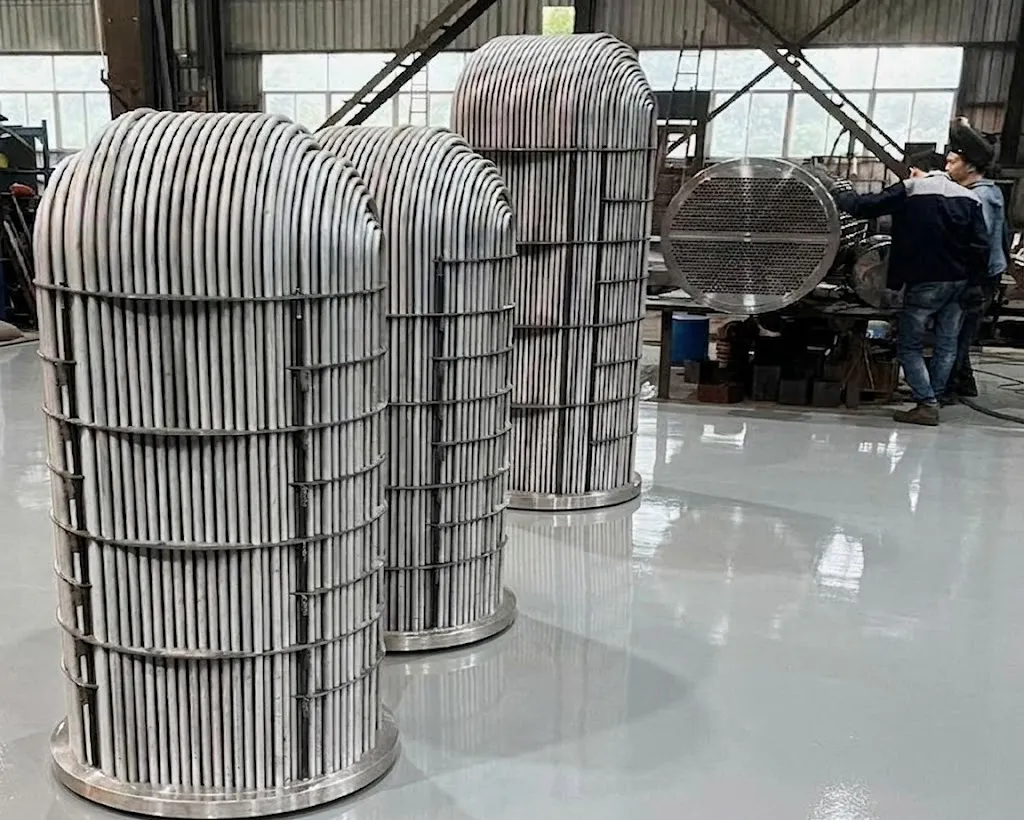
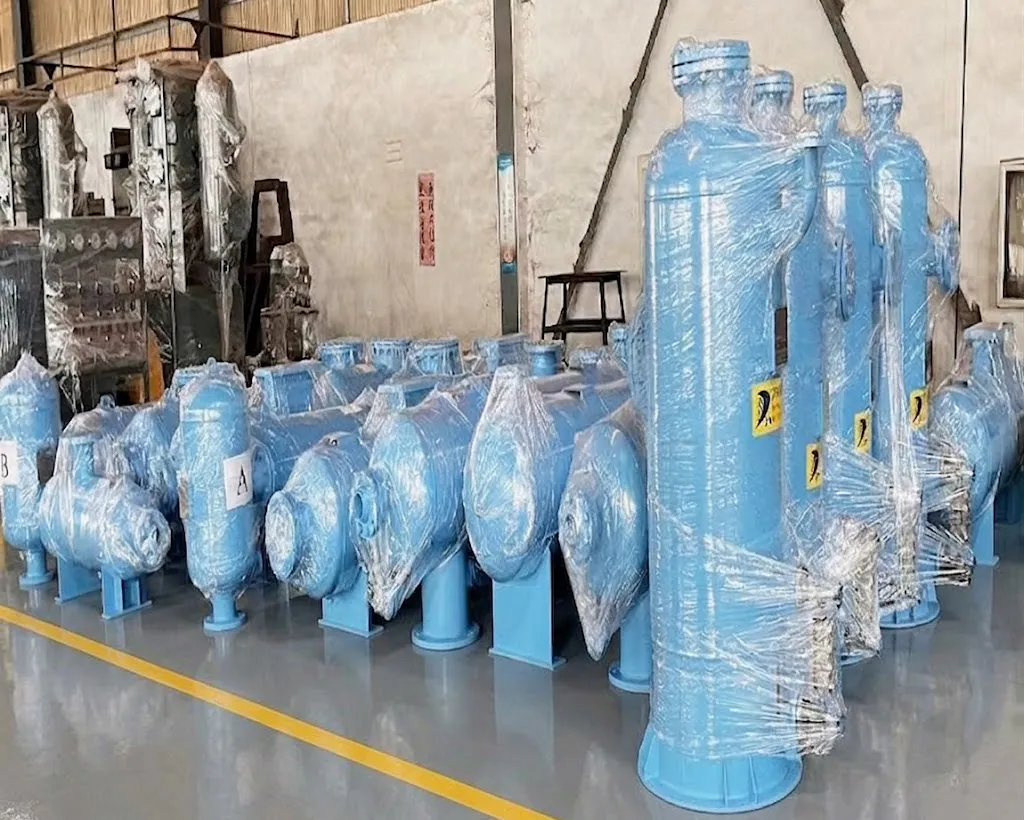
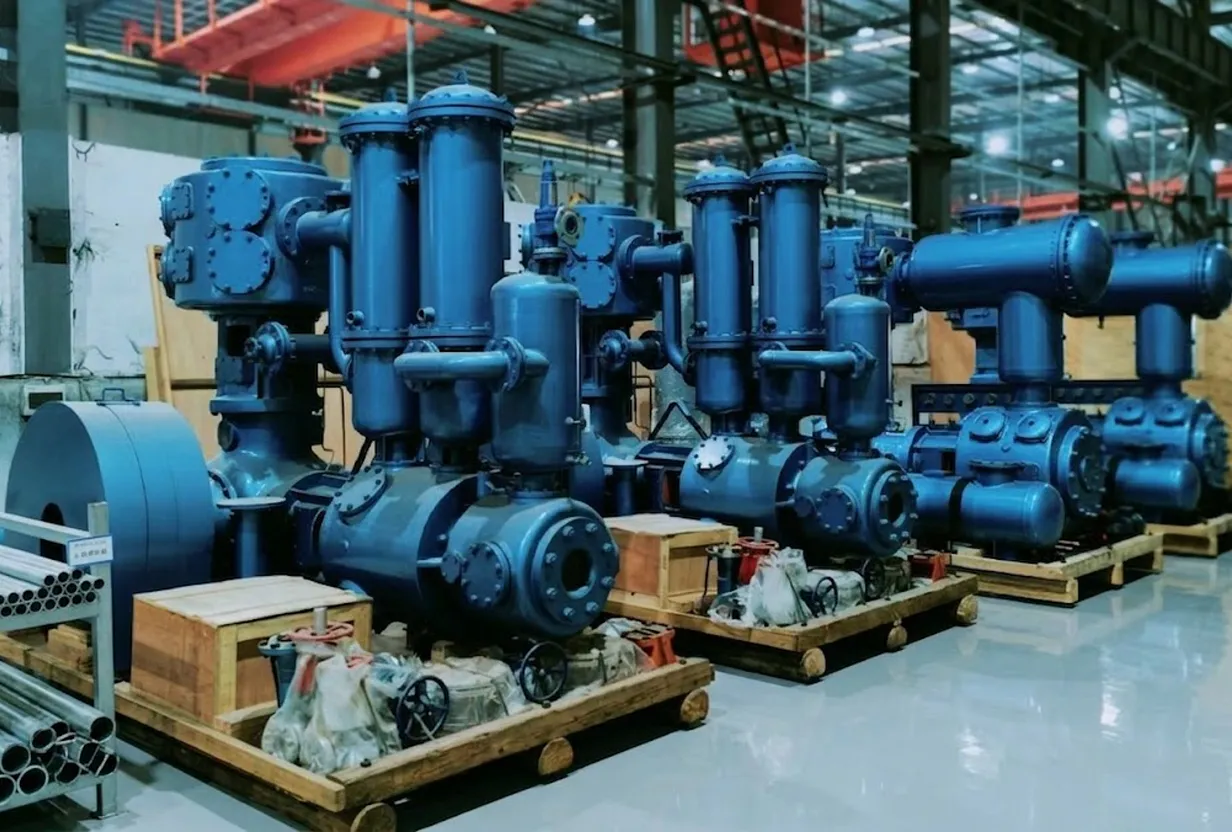
Our manufacturing capability for large reciprocating air compressor production is vertically integrated: in-house foundry for grey and nodular cast iron components; precision machining plant equipped with large-format CNC machining centres, boring mills, and coordinate measuring machines; heat treatment facility for controlled quench-and-temper cycles on forgings; pressure vessel fabrication shop certified for Class I and II vessels; final assembly plant with overhead cranes rated for the heaviest compressor frames; and a combined test centre with physical, chemical, analytical, and performance test capabilities. A provincial-level compressor research institute operating within the same facility drives continuous product improvement across the full compressor range.
The product portfolio spans piston (reciprocating), screw, and diaphragm compressor families across the M, H, D, L, P, Z, LG, JY, and G series — handling process media from air and nitrogen through hydrogen, CO₂, acetylene, and mixed refrigerant gases. Total output range covers 0.1 to 600 Nm³/min at pressures from 0.1 to 32.0 MPa with drive power from 5.5 to 10,000 kW. This breadth of compressor capability allows buyers to source a complete multi-machine compressed air and process gas package from a single supplier — simplifying vendor qualification, technical interface management, and long-term spare parts supply for both this reciprocating air compressor and any future additions to the site compressed air fleet.
1951
Founded
70+
Years of Production
320
Employees
600+
Production Equipment Sets
10
National Patents
ISO 9001
Since 2001
Workshop
8. Related Products & System Compatibility
Beyond this reciprocating air compressor, we manufacture and supply complementary industrial equipment that integrates directly with compressed air systems — enabling customers to consolidate sourcing, simplify system design, and benefit from single-supplier technical support across the complete air supply and end-use equipment package.
ISBM Machine — High-Output Blow Moulding
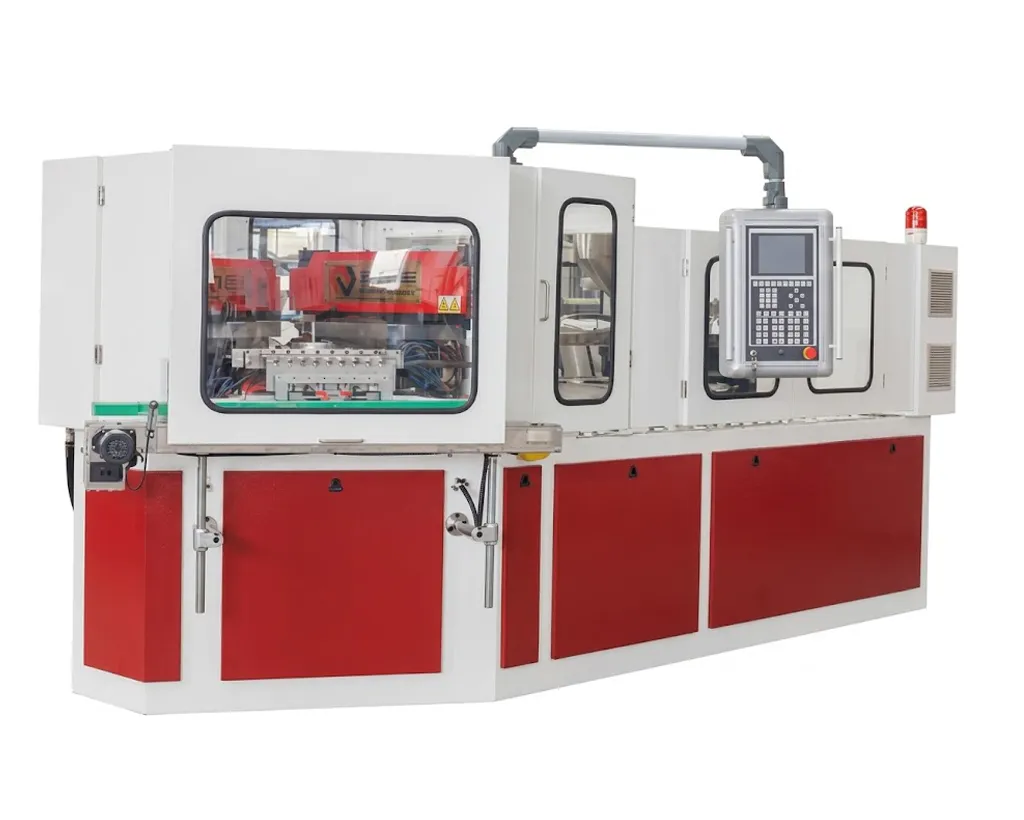
For PET packaging producers operating at scale, this reciprocating air compressor pairs directly with our ISBM Machine — an injection stretch blow moulding system that integrates preform injection, stretch blow, and ejection in a single continuous cycle. Matching the 100 m³/min output of the EP-2D12 Ⅲ-100/8 reciprocating air compressor to a bank of high-output ISBM lines creates a compressed air supply system with headroom to accommodate future line additions without requiring additional compressor capital expenditure — a supply architecture that procurement teams regularly identify as a significant advantage of the one-stop supply model.
Three Phase Asynchronous Motor
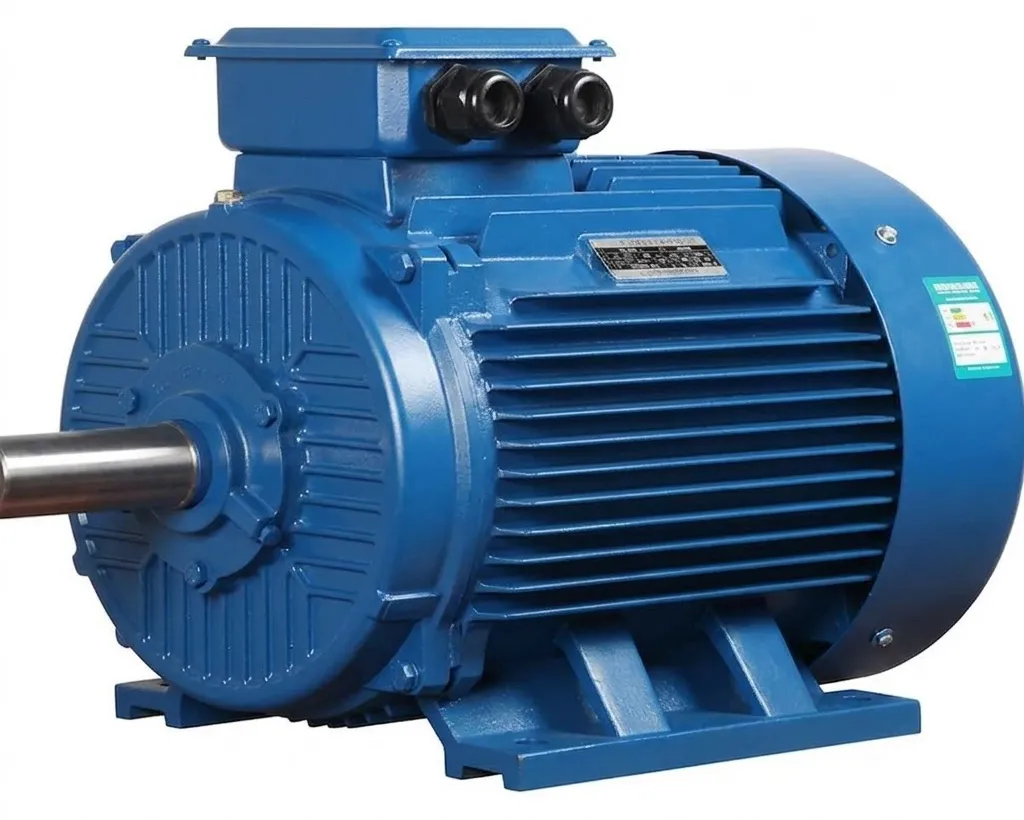
The EP-2D12 Ⅲ-100/8 operates on a three-phase asynchronous motor at either 6 kV or 10 kV supply voltage, depending on site infrastructure. We supply matched high-voltage motor units from our qualified supply chain, factory-coupled to the reciprocating air compressor and run-tested as a complete drive train prior to shipment. This factory integration step eliminates a common source of commissioning delays — shaft alignment problems between separately purchased motor and compressor units — and ensures that the electrical protection relay settings delivered with the machine are calibrated to the actual motor characteristics of the specific unit shipped, not to nominal nameplate values.
Frequently Asked Questions
Editor: PXY