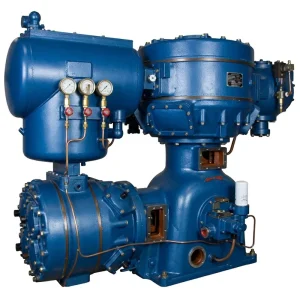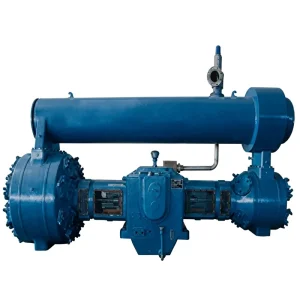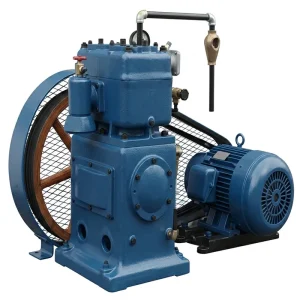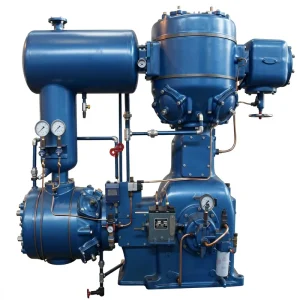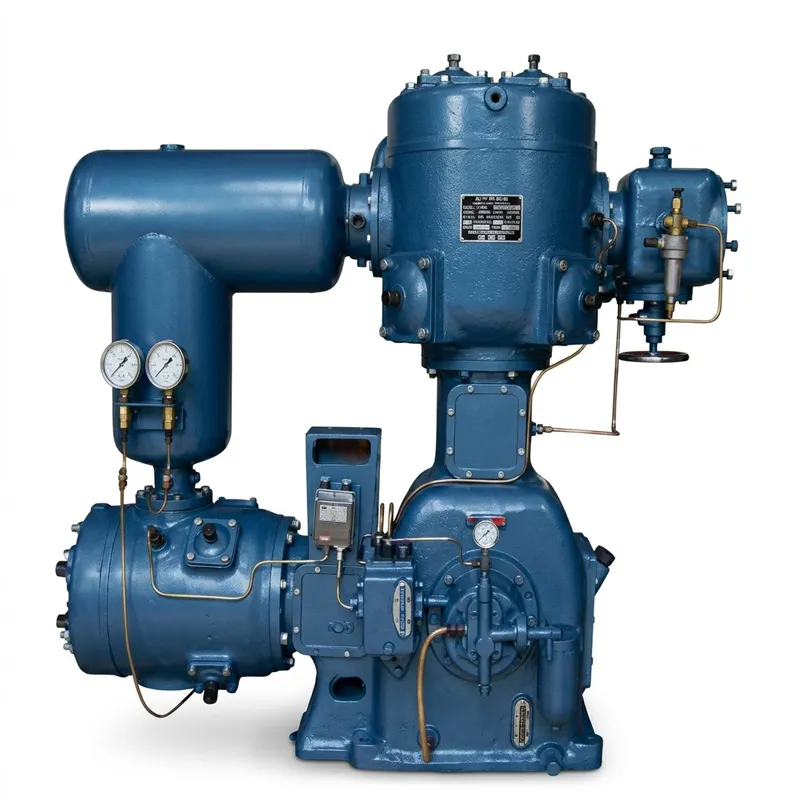
EP-3L-10/8 Reciprocating Air Compressor
The EP-3L-10/8 Reciprocating Air Compressor is engineered for heavy-duty, continuous operation. It delivers a free air delivery (FAD) of 10 m³/min at a rated discharge pressure of 0.8 MPa. Driven by a 65 kW motor, this unit is built for reliability in demanding environments. Key construction features include a welded-steel frame, cast-iron crankcase, and precision-honed cylinder bores. It operates with low specific power consumption thanks to its inter-cooled two-stage design, making it suitable for applications in petrochemical, steel, mining, and general industrial sectors. The unit is manufactured in compliance with ISO 9001 and designed to meet EU PED and Machinery Directive standards.
Reciprocating Air Compressor Series
EP-3L-10/8 Reciprocating Air Compressor
A two-stage, two-column industrial reciprocating air compressor engineered for demanding continuous-duty cycles. Delivering 10 m³/min at 0.8 MPa, this reciprocating air compressor is purpose-built for heavy industrial environments across France, Europe, and global markets where reliability and volumetric efficiency are non-negotiable requirements on every production shift.
Pressure: 0.8 MPa
Power: 65 kW
Two-Stage / Two-Column
1. Technical Specifications
The table below summarises the key performance parameters for the EP-3L-10/8 reciprocating air compressor. All values are measured under standard inlet conditions (20 °C, 101.325 kPa, 0% relative humidity) in accordance with ISO 1217 Annex C methodology — the referenced standard for volumetric flow measurement across EU member states including France — so buyers can make direct comparisons between this and other reciprocating air compressor models during the supplier evaluation process.
| Parameter | Value | Unit / Remark |
|---|---|---|
| Model | EP-3L-10/8 | Two-column, Two-stage |
| Free Air Delivery (FAD) | 10 | m³/min |
| Rated Discharge Pressure | 0.8 | MPa (≈ 8 bar g) |
| Drive Motor Power | 65 | kW |
| Supply Voltage | 380 | V / 50 Hz, 3-Phase |
| Compression Stages | 2 | Two-stage inter-cooled |
| Overall Dimensions (L×W×H) | 2340 × 910 × 2070 | mm |
| Unit Weight | 1.80 | t (metric tonnes) |
| Cooling Method | Air-cooled / Water-cooled (optional) | Inter-stage and after-cooling |
| Lubrication | Splash + Pressure-feed | Crankcase lubricated |
| Noise Level (at 1 m) | ≤ 82 | dB(A) |
| Ambient Temperature Range | 5 – 40 | °C |
| Safety Relief Valve Setting | 1.1 × Rated Pressure | Per ISO 11011 / PED 2014/68/EU |
2. Five Key Competitive Advantages
Why industrial buyers across France and the broader European market consistently choose this reciprocating air compressor over competing technologies — from the engineering team behind one of the industry's longest-running reciprocating air compressor programmes:
01 — Proven Two-Stage Compression Efficiency
The two-stage architecture of this reciprocating air compressor distributes the total compression ratio between stages, reducing inter-stage temperatures and cutting specific power consumption compared to single-stage designs. The result is noticeably lower energy bills at sites running multiple shifts, which is why buyers comparing reciprocating air compressor vs rotary screw alternatives at this pressure range frequently favour the recip compressor for continuous high-load duty. Measured over a typical five-year operating cycle, the energy saving from a well-selected reciprocating air compressor represents a meaningful offset against initial capital expenditure.
02 — Field-Proven Mechanical Durability
Cast-iron cylinders, forged crankshafts, and precision-honed bores are the backbone of this reciprocating air compressor. The L-series design lineage has accumulated millions of operating hours across petrochemical, mining, and steel plant installations worldwide. Scheduled maintenance intervals for the reciprocating air compressor are straightforward: valve pack inspection at 2,000 hours, full overhaul at 16,000 hours under normal conditions — keeping total maintenance cost predictable for plant managers and procurement teams who need total-cost-of-ownership clarity before committing to a reciprocating air compressor purchase.
03 — Wide Pressure Flexibility
Standard delivery of this reciprocating air compressor at 0.8 MPa (8 bar) covers the majority of industrial pneumatic tool circuits and process line requirements. Upon request, the reciprocating air compressor design can be configured for elevated discharge pressures within the broader L-series range, offering procurement flexibility for facilities that anticipate future capacity or pressure upgrades without the need to replace the entire air compressor machine — a compelling argument for long-term site development planning.
04 — ISO 9001-Certified Manufacturing
Continuous ISO 9001 certification since 2001 means every unit leaving the assembly floor has been built and tested against an internationally audited quality management system. This matters significantly for European buyers, where supplier qualification processes under directives such as the Pressure Equipment Directive (PED 2014/68/EU) often require documented proof of quality system compliance from reciprocating compressor manufacturers.
05 — Full Aftersales Support Network
A dedicated international service team, supported by a provincial-level compressor research institute and a spare-parts warehouse, ensures that reciprocating air compressor spare parts are available quickly regardless of geography. Export-ready documentation — CE declarations, material test certificates, pressure vessel certificates — is provided as standard, simplifying customs clearance and site commissioning for projects in France and across the EU single market.
3. Reciprocating Air Compressor Working Principle
Understanding the reciprocating air compressor working principle helps clarify why this technology remains the industry benchmark for high-pressure, reliable air delivery. The EP-3L-10/8 reciprocating air compressor operates on a positive displacement cycle: a crankshaft, driven by the electric motor via a belt-drive or direct-coupling arrangement, converts rotary motion into the reciprocating linear motion of pistons within their cylinders — the defining mechanical characteristic shared by every reciprocating air compressor design regardless of scale.
During the first stage of this reciprocating air compressor, the piston moves downward (intake stroke), creating a pressure differential that opens the inlet valve and draws ambient air into the cylinder. As the piston reverses direction on the compression stroke, the inlet valve closes and the trapped air is compressed until discharge pressure is reached, at which point the outlet valve opens and compressed air passes to the inter-stage cooler. This cooling stage is critical to the reciprocating air compressor's efficiency: by reducing the temperature of the partially compressed air before it enters the second stage, volumetric efficiency improves and the work required for second-stage compression is substantially reduced, which directly lowers the energy consumed per unit of delivered air.
In the second stage of this reciprocating air compressor, a smaller-diameter cylinder further compresses the cooled air from inter-stage pressure up to the final discharge pressure of 0.8 MPa. The air then passes through an after-cooler and moisture separator before entering the distribution system. This inter-cooled two-stage reciprocating type air compressor configuration achieves a specific power consumption (kW per m³/min) that is consistently competitive with rotary alternatives at this pressure class, while offering the added benefit of delivering air at near-ambient temperature — a key reciprocating air compressor advantage for applications sensitive to thermal influence on downstream process quality or product integrity.
4. Materials & Construction
The material selection for the EP-3L-10/8 reciprocating air compressor reflects decades of operational experience across industries where premature component failure carries substantial financial consequences. Every major structural element of this reciprocating air compressor is chosen not only for raw strength but for fatigue resistance, machinability to tight tolerances, and compatibility with standard lubrication systems used across the industrial reciprocating air compressor sector.
Cylinder Body & Cylinder Head
High-strength grey cast iron (HT250 grade), thermally stable and offering excellent damping characteristics that reduce vibration transmission to the foundation structure. Cylinder bores on this reciprocating air compressor are precision-honed to Ra 0.4 μm surface finish to minimise ring wear and blow-by over the service life of the machine.
Crankshaft & Connecting Rods
Forged alloy steel crankshafts are subjected to magnetic particle inspection to ensure freedom from sub-surface defects before machining. Connecting rods are die-forged from medium-carbon alloy steel and shot-peened to improve fatigue life at the critical fillet radii — a level of material quality assurance that differentiates serious reciprocating air compressor manufacturers from lower-specification alternatives.
Pistons & Rings
First-stage pistons are cast aluminium alloy for reduced reciprocating mass and better thermal conductivity. Second-stage pistons use nodular cast iron for the elevated pressure environment of this reciprocating air compressor. Piston rings are centrifugally cast chromium-treated iron, providing a running surface that resists scuffing during the critical initial break-in period and maintains low blow-by rates throughout the scheduled service interval.
Valves
Spring-loaded plate valves machined from stainless steel strip (AISI 420 tempered) deliver the fast opening and seating response necessary for high-speed reciprocating service. The valve assemblies are cartridge-style, enabling field replacement without special tooling — a critical advantage for plant engineers managing reciprocating air compressor parts under time pressure.
Frame & Crankcase
The main frame of this reciprocating air compressor is a rigid welded-steel base incorporating a cast-iron crankcase. The two-piece construction simplifies bearing access for scheduled inspections while maintaining the torsional rigidity required to prevent shaft misalignment under thermal cycling conditions common in foundry and steel plant environments where this reciprocating air compressor type is frequently deployed.
Bearings & Lubrication Circuit
Main bearings and big-end bearings use trimetal babbitt-lined shells engineered for L10 fatigue life exceeding 60,000 hours. The force-feed lubrication circuit delivers filtered, temperature-regulated reciprocating air compressor oil to all critical surfaces, with a low-pressure shutdown switch providing first-line protection against oil starvation events that could otherwise cause catastrophic internal damage to the reciprocating air compressor crankshaft assembly.
5. Regulatory Compliance & Standards
Industrial reciprocating air compressors are subject to a layered framework of mandatory directives, regional standards, and voluntary certifications. Buyers in France and the EU, as well as international markets, should verify compliance status during supplier qualification when procuring a reciprocating air compressor for regulated industrial environments. The following frameworks are most relevant for this product category:
EU — Pressure Equipment Directive (PED 2014/68/EU)
Any compressed air system operating above 0.5 bar on the EU market must satisfy PED requirements. Pressure vessels and integral piping above defined risk thresholds must carry CE marking, and conformity documentation must accompany the reciprocating air compressor. France enforces PED through national transposition under DGPR oversight, with site inspections carried out by approved bodies (organismes habilités) for higher-category equipment.
EU — Machinery Directive (2006/42/EC)
Reciprocating air compressor units sold in the EU must conform to the Machinery Directive, requiring a Declaration of Conformity, technical file, and CE marking on the complete machine. From 2027, this directive will be superseded by the Machinery Regulation (EU) 2023/1230. The EP-3L-10/8 export documentation is aligned to support these compliance pathways.
France — ATEX & Installation Rules
French sites classified as hazardous areas under the ATEX framework (Directives 2014/34/EU and 1999/92/EC) impose additional requirements on electrical equipment and control panels fitted to air compressor machines. Site engineers in France should verify Zone classification before specifying standard-specification units into potentially explosive atmospheres.
International — ISO 1217 & ISO 11011
Reciprocating air compressor performance acceptance testing follows ISO 1217 (Displacement compressors — Acceptance tests), and energy auditing of industrial air compressor installations aligns with ISO 11011 (Compressed air — Energy efficiency). Both standards are referenced in European public procurement specifications and major engineering contractor supplier codes of practice when evaluating an industrial reciprocating air compressor for facility contracts.
USA — ASME Section VIII & CAGI Standards
Projects destined for the North American market typically require ASME Section VIII compliance for pressure vessels and adherence to Compressed Air and Gas Institute (CAGI) data-sheet format for reciprocating air compressor performance reporting, enabling direct comparison between reciprocating compressor manufacturers. These requirements can be accommodated during the quotation engineering phase for any EP-3L-10/8 reciprocating air compressor order destined for North American sites.
Global — Quality Management ISO 9001:2015
Continuous certification under ISO 9001:2015 since 2001 provides an independently audited foundation for the quality management system governing design, manufacture, inspection, and after-sales support of every reciprocating air compressor we produce. The scope covers the full production process — from raw casting procurement through final reciprocating air compressor performance test — providing documented traceability at every manufacturing stage.
6. Application Scenarios
The EP-3L-10/8 reciprocating air compressor is supplied to facilities across diverse process industries globally. The following sectors represent the primary end-use applications where this reciprocating air compressor model has been deployed and validated over extended service periods:
⚙ Pneumatic Tool & Assembly Lines
Automotive assembly plants, metal fabrication shops, and general mechanical workshops depend on a consistent supply of compressed air to power impact wrenches, spray guns, riveters, and press equipment. The 10 m³/min delivery of this industrial reciprocating air compressor comfortably supports multiple simultaneous tools on a single ring main, reducing the number of compressor units required and simplifying the compressed air network layout — a practical advantage that plant engineers in France's automotive and aerospace sectors regularly cite when selecting a reciprocating air compressor for new facility builds.
🏭 Petrochemical & Refinery Process Air
Process air supply in oil refining, fertiliser production, and chemical synthesis requires a reciprocating air compressor that maintains stable pressure delivery through variable demand cycles. The L-series two-stage reciprocating air compressor configuration's inherent ability to hold tight outlet pressure tolerances makes it suitable for process instrumentation air and plant service air systems where pressure fluctuations translate directly to product quality deviations and costly process upsets.
🫧 PET Bottle Blowing (ISBM Pre-Blow Stage)
A growing application for this reciprocating air compressor is as the pre-blow supply stage feeding an ISBM (Injection Stretch Blow Moulding) machine. Reliable 8-bar air at the volumes delivered by the EP-3L-10/8 reciprocating air compressor enables consistent parison stretching — a critical quality parameter for PET container producers where wall-thickness uniformity is measured in fractions of a millimetre and any pressure deviation creates rejection events on automated inspection lines.
🔩 Steel, Foundry & Mining Operations
Foundries and steel mills operating pneumatic furnace controls, ladle deslagging systems, and dust-suppression circuits require robust reciprocating air compressors capable of sustained operation in thermally challenging environments. The EP-3L-10/8 reciprocating air compressor's cast-iron cylinder block and forged crankshaft maintain dimensional stability in ambient temperatures up to 40 °C, meeting the operational demands typical of heavy metallurgical production sites across Europe and global markets.
🌾 Food, Beverage & Pharmaceutical Plants
Where process air contacts product or primary packaging, food and pharmaceutical regulations in France (DGCCRF guidelines) and EU-wide (Regulation EC 1935/2004 for food-contact materials) govern permissible contaminant levels. This reciprocating air compressor can be specified with food-grade reciprocating air compressor oil and augmented with point-of-use filtration to achieve the required air purity classes defined under ISO 8573-1, making it a compliant choice for sensitive production environments in the food and beverage sector across France and globally.
⚡ Power Generation & Utilities
Power stations and utility facilities use compressed air for valve actuation, soot-blowing systems, and pneumatic control circuits. The EP-3L-10/8 reciprocating air compressor suits utility-grade service air applications where the compressed air system must achieve high availability factors. The simple, well-understood reciprocating type air compressor design means maintenance technicians can carry out valve and piston ring servicing with in-house competencies, without relying on specialist contractor call-outs that inflate maintenance budgets and extend downtime windows at power generation facilities.

7. About Us
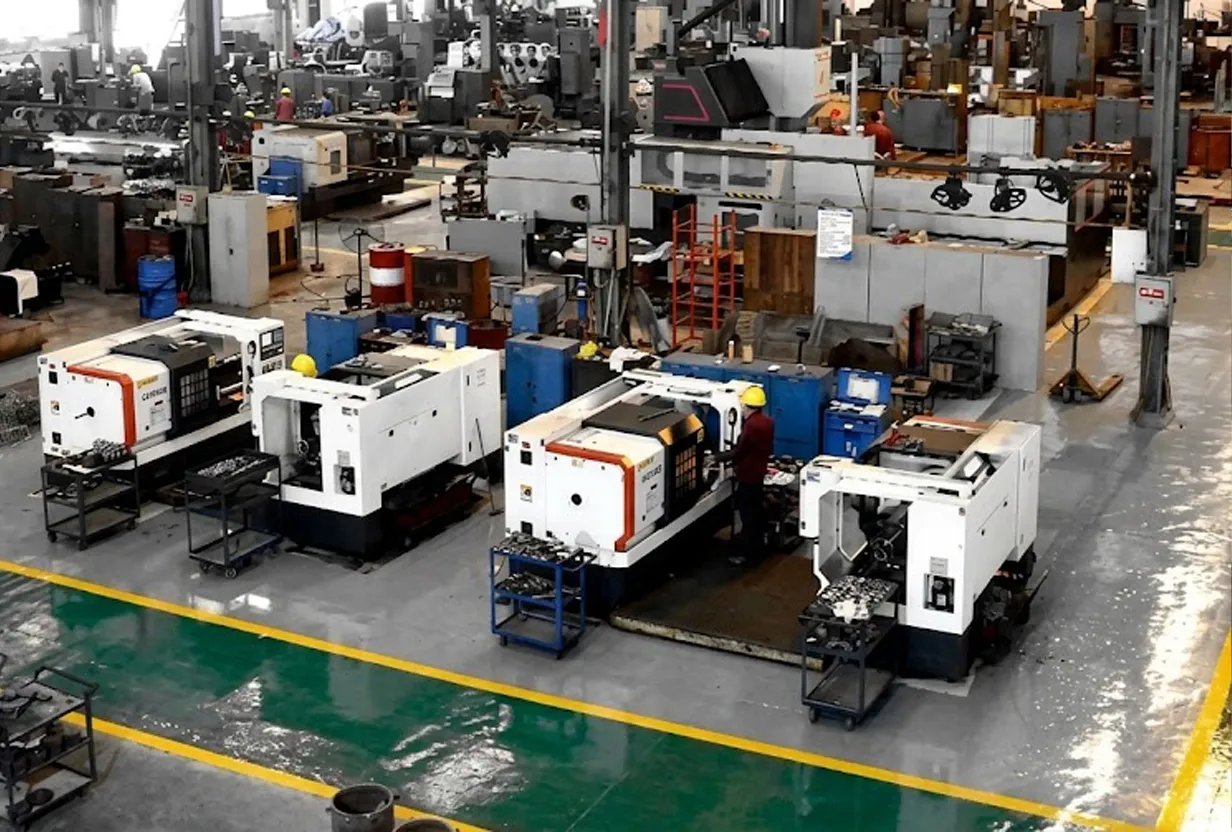
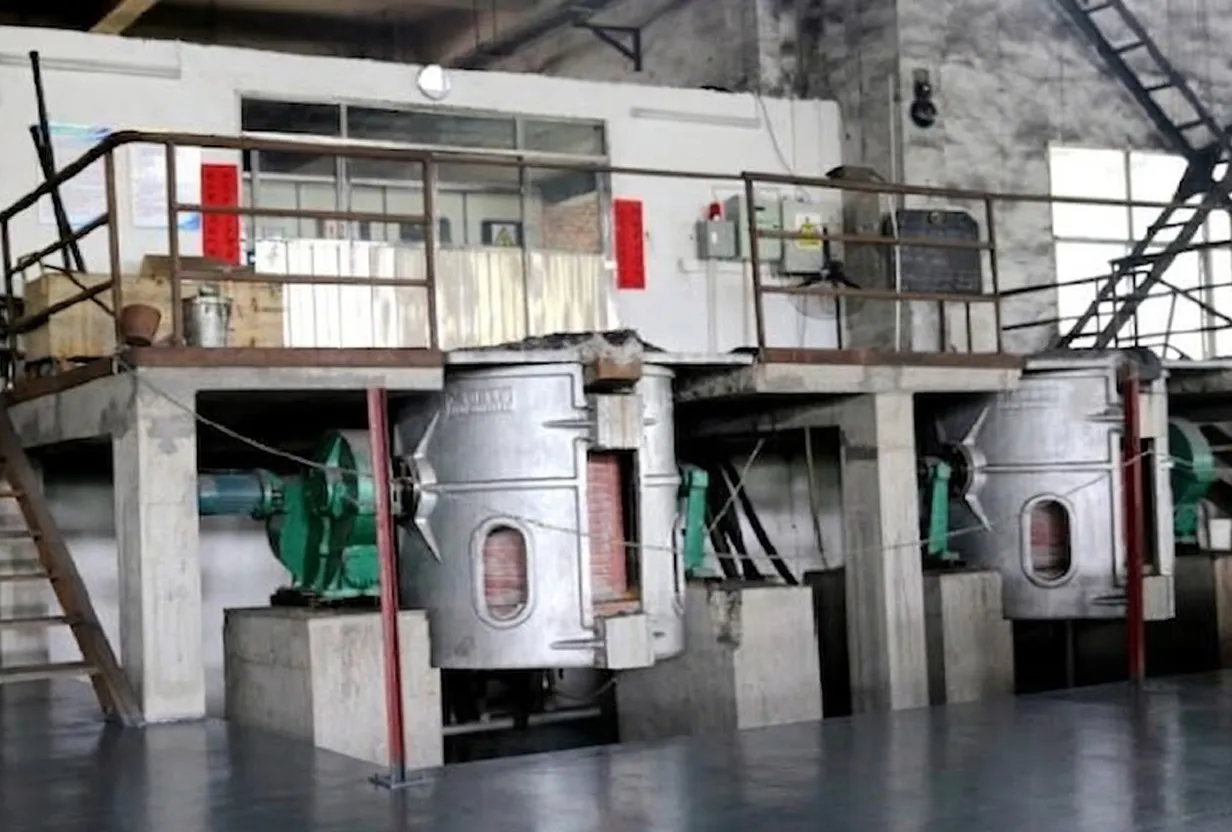
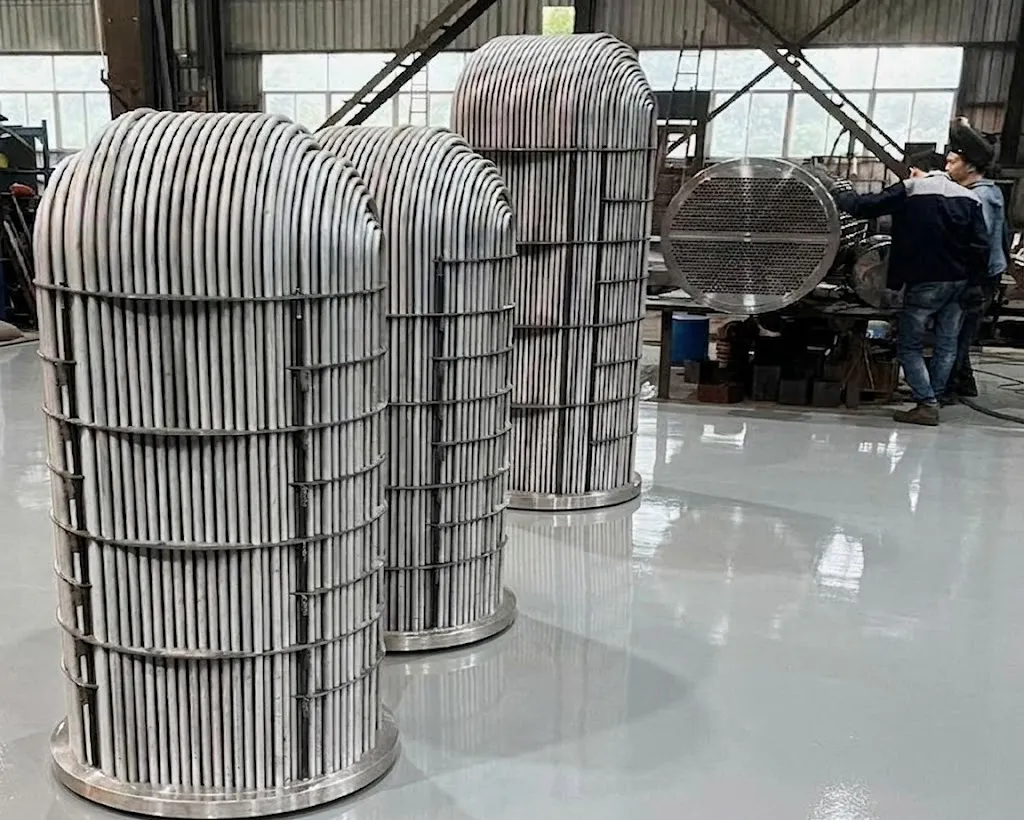
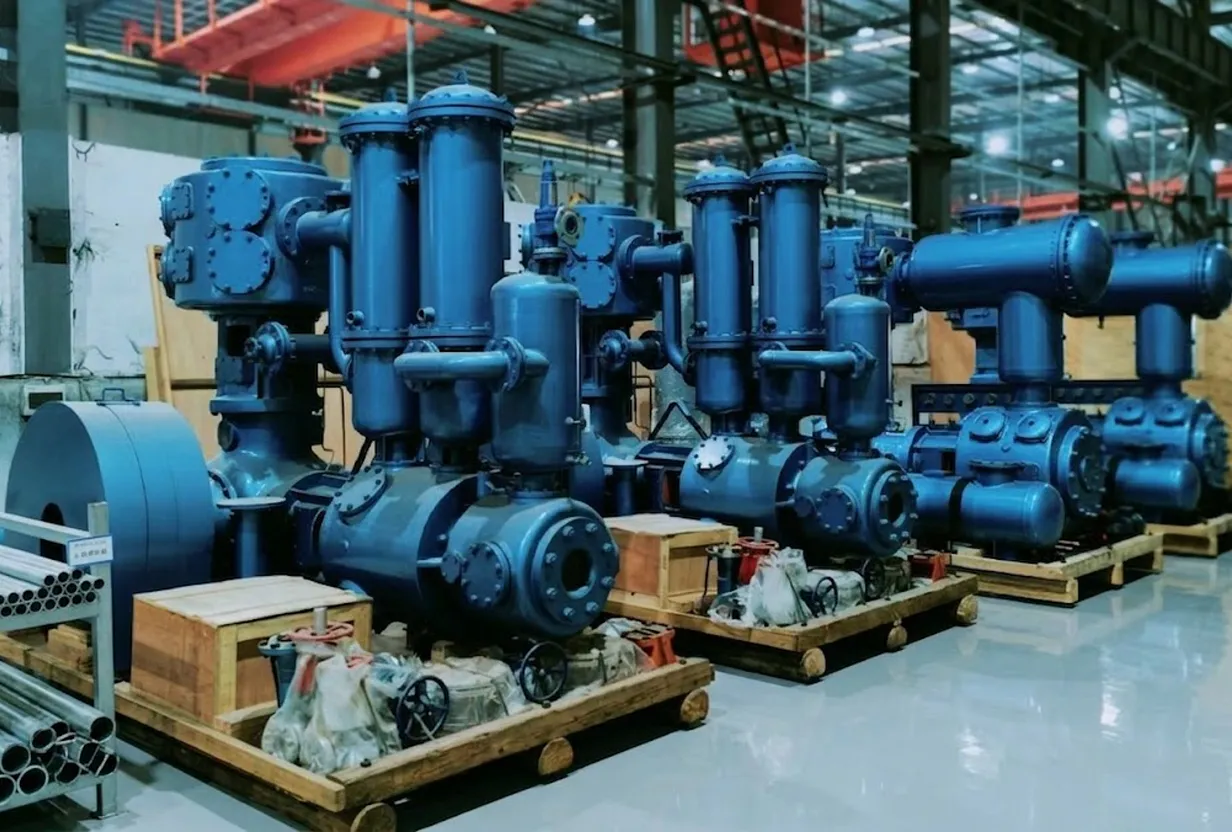
Our manufacturing capability encompasses every stage of the reciprocating air compressor production chain: a provincial-level compressor research institute, in-house foundry and casting facility, precision machining plant, heat treatment workshop, pressure vessel fabrication shop, final assembly plant, and a comprehensive quality testing centre with physical, chemical, and analytical instrumentation. This integrated capability is what allows us to guarantee both dimensional accuracy and material conformity for every reciprocating air compressor unit shipped — critical when reciprocating compressor manufacturers are assessed on long-term reliability rather than first cost alone by procurement teams in France and internationally.
Our product portfolio covers three major compressor families — piston (reciprocating), screw, and diaphragm types — across the M, H, D, L, P, Z, LG, JY, and G series. Compression media handled include air, nitrogen, oxygen, argon, hydrogen, carbon dioxide, carbon monoxide, natural gas, acetylene, and a range of industrial process gases. Output spans from 0.1 to 600 Nm³/min and pressures from 0.1 to 32.0 MPa, covering single machine drive power from 5.5 to 10,000 kW — a range that encompasses every application tier from small workshop reciprocating air compressor to large-scale process plant service compressor.
1951
Founded
70+
Years of Production
320
Employees
600+
Production Sets
10
National Patents
ISO 9001
Since 2001
Workshop
8. Related Products & System Compatibility
We manufacture and supply a complete ecosystem of complementary industrial equipment, enabling customers to source matched systems from a single supplier — simplifying procurement, commissioning, and long-term service coordination.
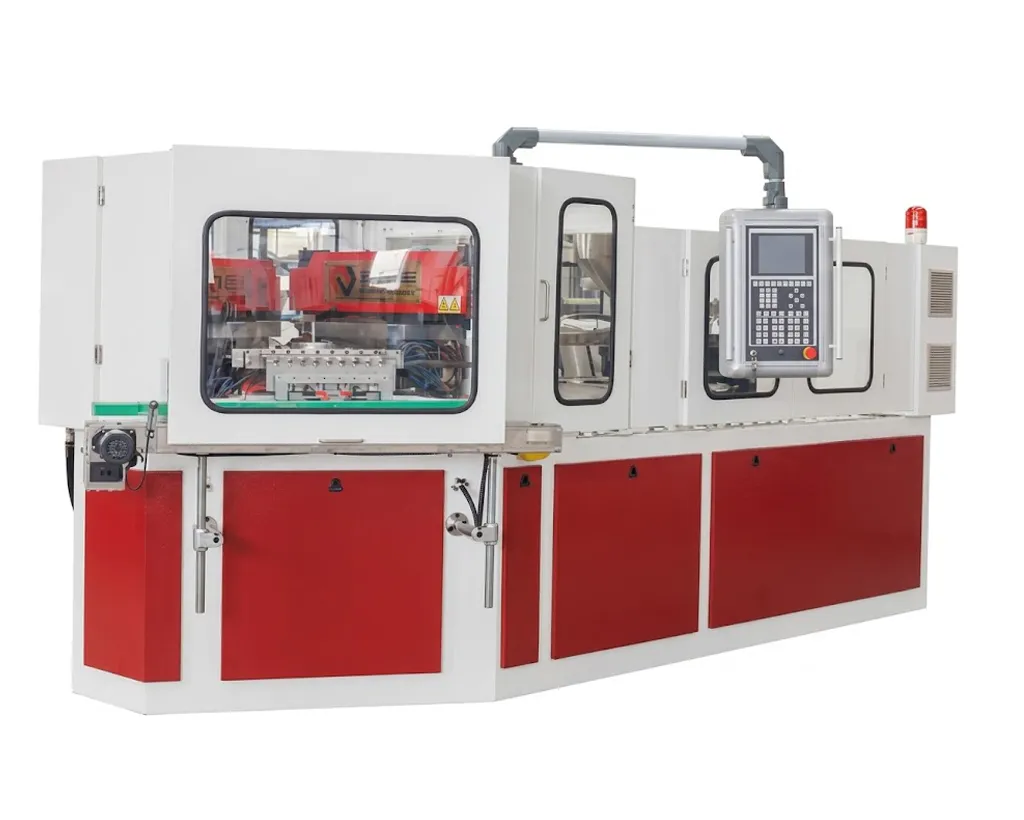
ISBM Machine — One-Step Blow Moulding
For PET bottle and container producers, our reciprocating air compressor pairs directly with the ISBM Machine — a one-step injection stretch blow moulding system that handles the complete preform-to-bottle cycle. Using the EP-3L-10/8 as the pre-blow air source and a dedicated high-pressure unit for the final blow stage creates a compact, fully integrated production line with matched flow and pressure characteristics — eliminating the system losses that occur when equipment from different manufacturers is combined.
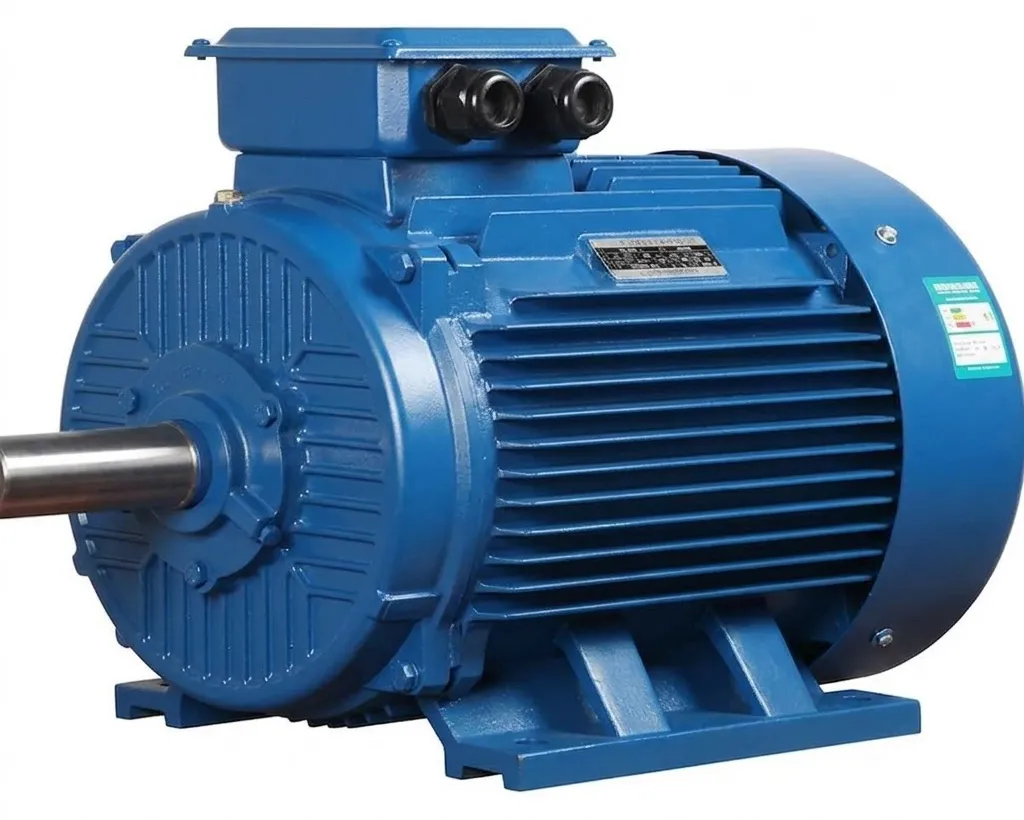
Three Phase Asynchronous Motor
The EP-3L-10/8 is designed for direct coupling or belt-drive connection to a standard three-phase asynchronous motor rated at 65 kW. We supply matched motor units from our verified supply chain, factory-aligned and test-run with the compressor before shipment. This turnkey approach reduces site installation time and ensures the combined drive train operates within the efficiency band assumed in the energy audit calculations — a point increasingly important for facilities subject to European energy performance audits under EN 16247.
Frequently Asked Questions
Editor: PXY